The Nazca Lines in Peru are one of those mysteries that stick in the imagination: vast, precise drawings etched into the desert floor that can only be seen in full from the air. They are ancient; they are enormous; and they are silent witnesses to people who lived nearly two thousand years ago. When you first hear “Nazca Lines,” you might picture enigmatic figures — a hummingbird mid-flight, a delicate spider, a shrouded figure staring upward — all drawn with lines so straight and shapes so deliberate that they force us to ask why and how. In this article we’ll walk through the history, the methods, the theories, the people who made them, and the modern technologies that are helping us understand them. Expect a human story as much as an archaeological one: of labor, belief, artistry, environment, and myth.
Walking into the story of the Nazca Lines is like stepping into a detective novel where the clues are enormous and the suspects are ancient. The lines sit on a high arid plateau in southern Peru, between the towns of Nazca and Palpa, and they were created by removing the dark, oxidized surface stones to expose the pale sand beneath. From the ground, many look like shallow scratches; from above, they resolve into animals, plants, geometric shapes and straight lines that run for kilometers. Their scale is what makes them so striking — some figures stretch 200 meters or more — and their precision suggests careful planning and a communal effort. The Nazca lines are not just marks on earth; they are an expression of a culture’s priorities, cosmology, and technical skill, preserved by a climate that almost perfectly protects them.
The story of the Nazca Lines also intersects with modern fascination and speculation. In the 20th century, when aerial photography became common, the lines attracted pressing questions and wild theories alike, including explanations ranging from astronomical calendars to alien runways. Today, scholars use high-resolution satellite images, drones, and even LIDAR to map and study the lines, while conservationists struggle to protect them from natural erosion and human threats. You’ll find established science and romantic mysticism side by side in discussions about Nazca, which only deepens the fascination. Let’s explore the geoglyphs’ origins, techniques, cultural context, and what they might tell us about the people who made them.
Where the Nazca Lines Are and What They Look Like
The Nazca plateau sits roughly 400–500 meters above sea level, a desert corridor that stretches along Peru’s southern coast. It’s an extreme environment: almost no rainfall, persistent dry winds, and a bedrock of iron-rich pebbles called desert varnish that darkens the surface. By scraping away that dark layer, ancient people revealed lighter sand below, creating high-contrast lines that have lasted for centuries. The Nazca Lines include hundreds of straight lines, over 70 distinct animal and plant designs called biomorphs, and many trapezoids and geometric shapes. Some straight lines extend more than 20 kilometers, appearing almost impossibly straight across hills and valleys.
If you approach a geoglyph on foot, it can be underwhelming — a low trench where the rock was cleared. But step back — or better yet, rise in a small plane — and the figure coheres into a design. That perspective shift is part of their magic: the features were designed to be apprehended from above or from distant high ground, raising questions about their intended audience and use.
Famous Figures and Motifs
The Nazca repertoire includes recognizable shapes that capture the popular imagination: a long-beaked hummingbird, an elegantly curved monkey, a long-legged spider, a condor, and a swimmer-like figure sometimes called “the astronaut.” These figures vary in size and complexity — some are stylized and abstract, others highly detailed. Beyond animals and anthropomorphic forms, there are also geometric forms and large trapezoids whose function remains debated.
- Hummingbird — delicate lines and a sense of motion, often cited for its elegance.
- Monkey — swirling tail and coiled pattern, sometimes linked to the Amazon but present in Nazca iconography.
- Spider — a design with long legs, often discussed in relation to astronomical alignments.
- Condor — with expansive wings, possibly symbolic of the sky or a deity.
- The “Astronaut” or oculate figure — humanlike, enigmatic, and a favorite for speculative interpretations.
When and Who: The People Behind the Lines
Archaeologists generally attribute the major phase of Nazca-line construction to the Nazca culture, which flourished between roughly 200 BCE and 600 CE. However, geoglyph making began earlier and different groups may have added lines during various periods. The region supported complex societies whose pottery, textiles, and tombs reveal religious practices and everyday life. The people who made the lines left few written records, so researchers rely on material culture, burial contexts, and ethnographic analogy to reconstruct their beliefs and social organization.
The lines were likely created by coordinated community efforts. Creating a design visible at scale would have required planning, labor, and a core of individuals with specialized skills — designers, line supervisors, and workers who scraped thousands of square meters. That implies social organization and some form of leadership that could mobilize people for non-subsistence tasks. Since many geoglyphs are near ceremonial centers, many historians think the lines were linked to ritual activities or community identity.
Dating the Lines
Dating the Nazca Lines is tricky because the figures are simple disturbances of the ground rather than structures with built layers or organic remains. Radiocarbon dating has been possible in a few contexts — for example, when organic material like wood or plant fibers is found in a trench associated with line construction or in offerings near geoglyphs. These dates generally support a period spanning from the Late Paracas culture (preceding Nazca) into the Nazca period itself. Stratigraphic analysis and cross-dating with ceramics and textiles also help bracket construction phases. Recent analytical techniques, including optically stimulated luminescence (OSL), which measures when sediments were last exposed to light, have been applied in some studies to refine chronologies.
How the Lines Were Made: Methods and Techniques
One of the most satisfying parts of studying the Nazca Lines is realizing they are not supernatural works of impossible technology but products of clever, practical techniques. The basic method is simple: the Nazca removed the dark varnished stones from the desert surface to expose lighter sand beneath, creating contrast. Yet, producing perfectly straight lines and proportionate animals at this scale required planning and surveying.
Archaeologists have demonstrated that simple tools and methods could have achieved spectacular results. Stakes and cords can be used to align long straight lines; grids and scaled drawings can help transfer a small design to a large surface; sightlines from low hills or constructed viewing platforms can provide vantage points for checking form. The absence of complex instruments does not mean a lack of sophistication — instead, the Nazca used intelligent engineering adapted to local conditions.
Steps in Making a Line or Figure
- Choose a site: a flat, dry surface with crusty varnish that will preserve contrast once scraped.
- Design phase: create a sketch or small-scale model; plan measurements and reference points.
- Marking and alignment: set stakes and tie cords to outline long lines and key points.
- Clearing: remove stones and scrape to the lighter surface beneath.
- Maintenance: occasional re-scraping and clearing to keep lines visible.
You can imagine groups of workers operating under supervision, clearing lines and adjusting the shapes. Some figures required curved planning and careful proportioning — evidence of a precise, sometimes iterative approach.
Theories on Purpose: Ritual, Astronomy, Water, and More
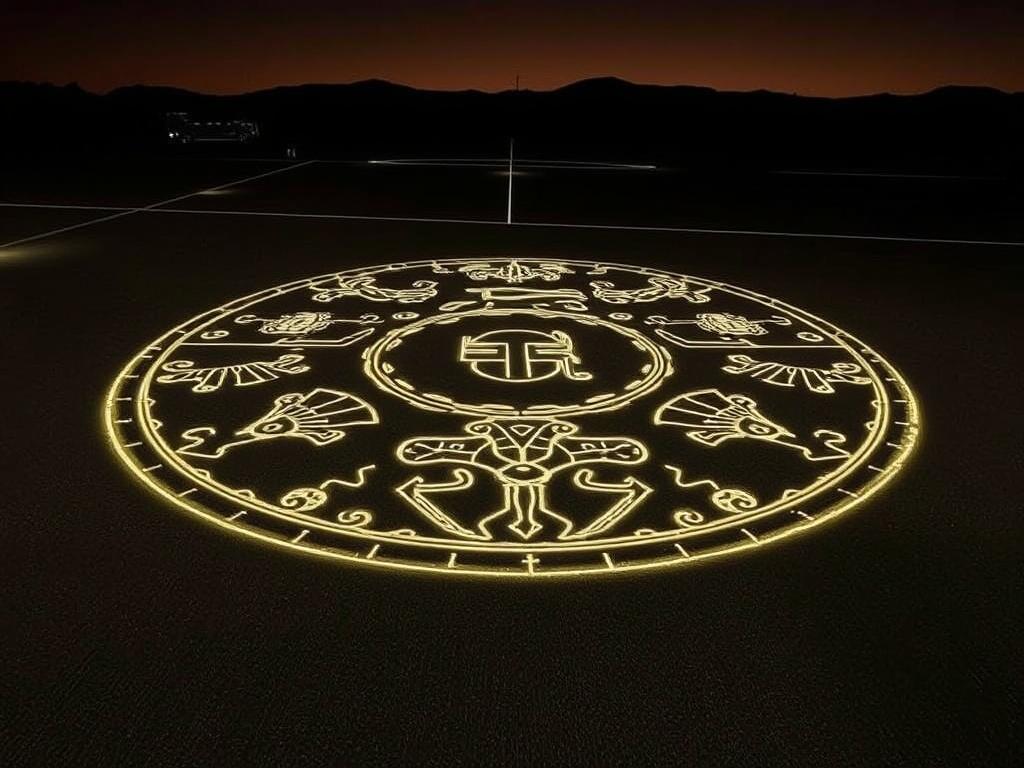
Why were the Nazca Lines made? The answer is not singular; multiple theories have been proposed and many probably intersect. Scholars generally prefer explanations rooted in the cultural, ecological, and ritual contexts of ancient Nazca society. Here are prominent theories, each with evidence and challenges.
1. Ritual and Religious Functions
One leading idea holds that the lines were part of ritual activities directed toward deities or spirits, especially those associated with water and fertility. In an arid landscape, water is vital; rituals aimed at securing rainfall or favorable conditions for agriculture would be central. Many geoglyphs are near ceremonial centers and cemeteries, and archaeological finds of offerings suggest ritual use. The animal and plant figures might have represented mythical beings or served as petitionary symbols in religious ceremonies.
2. Pilgrimage Routes and Processions
Some scholars suggest the straight lines and pathways were routes for ritual processions: lines guided participants in ceremonies, with monuments or geoglyphs serving as focal points. From this perspective, the scale of the lines makes sense as communal pathways that orchestrated movement in ritual contexts. Processions are common in many cultures as a way to connect people with sacred landscapes, and Nazca could be similar.
3. Water Cult and Hydraulic Calendar Theories
Given the desert environment, several investigators argue that the lines relate to water — perhaps as markers aligned with springs, aquifers, or underground water sources. Another variant links geometric lines and trapezoids to water siphoning systems or ceremonial devices intended to connect people with water deities. Proponents also suggest some lines align with astronomical events relevant to agricultural timing, functioning as an agricultural calendar. Critics point out that consistent astronomical alignments are hard to prove across the entire ensemble of lines.
4. Landscape Markers and Social Identity
Geoglyphs could be statements of group identity: markers that claim territory, mark boundaries, or encode clan symbols. In this view the lines and images are public art, expressions of shared values, and focal points for social cohesion. Their visibility from above could be incidental or intentional, signaling to observers on nearby hills or future generations.
5. Pseudoscientific and Fringe Theories
The dramatic scale of the lines has invited speculative theories, most famously the idea that they were aerial runways for alien spacecraft or were created with the help of extraterrestrials. These views are not supported by archaeological evidence. Another fringe idea posits that the lines encode advanced astronomical knowledge or mathematics beyond what Nazca society could plausibly have. While some patterns show alignments or mathematical properties, rigorous studies show these do not require supernatural explanations — rather, they reflect the human ability to plan and measure.
Most professional researchers favor ritual, cosmological, and water-related interpretations as grounded in archaeological contexts. But because lines are nonverbal, multiple interpretations can be plausible, and some may have been multifunctional.
Preservation: How the Nazca Lines Have Survived and Their Threats
The Nazca Lines owe their preservation largely to the region’s dryness. Rain is rare, winds are steady rather than gusty, and the desert varnish prevents rapid erosion. That said, preservation is never guaranteed. Natural processes and increasing human activity pose threats.
In recent decades, threats have included vehicle tracks from unauthorized tourism and local development, invasive plant growth following occasional rains, and looting or vandalism. One notorious recent event involved the construction of an illegal access road that cut across lines and sparked global outrage. Climate change could alter rainfall patterns, introducing more erosion. Dust storms and earthquakes also represent risks.
The Peruvian government and UNESCO, which designated the Nazca Lines a World Heritage Site in 1994, have taken measures to protect them: restricted access, designated viewpoints, aerial monitoring, and site management plans. Still, balancing accessibility for residents and tourists with conservation remains a challenge, especially in economically pressured areas.
How Modern Technology Helps Protect the Lines
Technology is now a key ally in preservation. High-resolution satellite imagery, drones, LIDAR scanning, and multispectral imaging allow researchers to map lines precisely, detect previously unknown features, and monitor changes over time. Remote monitoring can flag damage quickly and guide conservation responses. Digital archives of the geoglyphs provide a record that can be invaluable for restoration when minor damage occurs. Citizen-science initiatives and public education also play roles in raising awareness and reducing harmful behaviors.
Modern Research: Mapping, Drones, and New Discoveries
Archaeological research on the Nazca Lines has evolved from sketches and early aerial photographs to sophisticated digital mapping. Recent decades have seen an explosion of discoveries thanks to new imaging technologies and computer analysis. Drones equipped with high-resolution cameras can fly low and produce detailed orthophotos of geomorphic features, revealing lines obscured by sand or vegetation. LIDAR penetrates some surface clutter and provides precise topographic models. Machine learning has even been used to help detect subtle geoglyphs in satellite imagery.
These methods are not only revealing unknown lines but also enabling comprehensive surveys that look for patterns in orientation, clustering, and context. By combining mapping with archaeological excavation and dating, researchers are building richer narratives about phases of construction, cultural significance, and how the lines fit into broader regional systems.
Recent Notable Findings
In recent years, archaeologists have discovered new geoglyphs and refined our understanding of previously known ones. For example, studies around Palpa and beyond have revealed earlier geoglyph traditions pre-dating Nazca, suggesting a longer cultural history of earthworks in the region. Analytical work has identified activity areas, potential ritual deposits, and connections to nearby settlements. These incremental pieces are reshaping a once-fragmentary picture into a more coherent story.
Visiting the Nazca Lines: Practical Advice and Ethical Considerations
For travelers, seeing the Nazca Lines is a dream. There are a few ways to appreciate them: from the air on a small sightseeing plane, from observation towers near the Pan-American Highway, and from guided ground visits to protected viewpoints. Each method offers different experiences and implications for preservation.
- Plane tours: Provide the clearest views of the full figures but require careful choice of operator for safety and respect for conservation rules.
- Viewing towers: Affordable and lower-impact; towers give good views of a few figures and are positioned to minimize damage.
- Guided land visits: Offer contextual knowledge and close encounters with the plateau; must be done with authorized guides and designated paths.
When visiting, be mindful of ethics: follow park rules, keep to paths, do not touch or walk on lines, and support local businesses that practice sustainable tourism. The Nazca economy benefits from tourism, but irresponsible visitation can damage the very heritage visitors come to see.
How to Choose a Responsible Tour
| Factor | What to Look For | Why It Matters |
|---|---|---|
| Operator Credentials | Licensed agencies, transparent safety records | Safety and legal compliance |
| Sustainability Practices | Limits on flights, small group sizes, respect for protected areas | Reduces environmental impact and long-term harm |
| Local Engagement | Employs local guides, supports community projects | Benefits local livelihoods and creates stewardship |
| Education | Provides background info, promotes conservation | Enhances visitor understanding and reduces risky behavior |
Iconography and Cultural Context: Reading the Designs
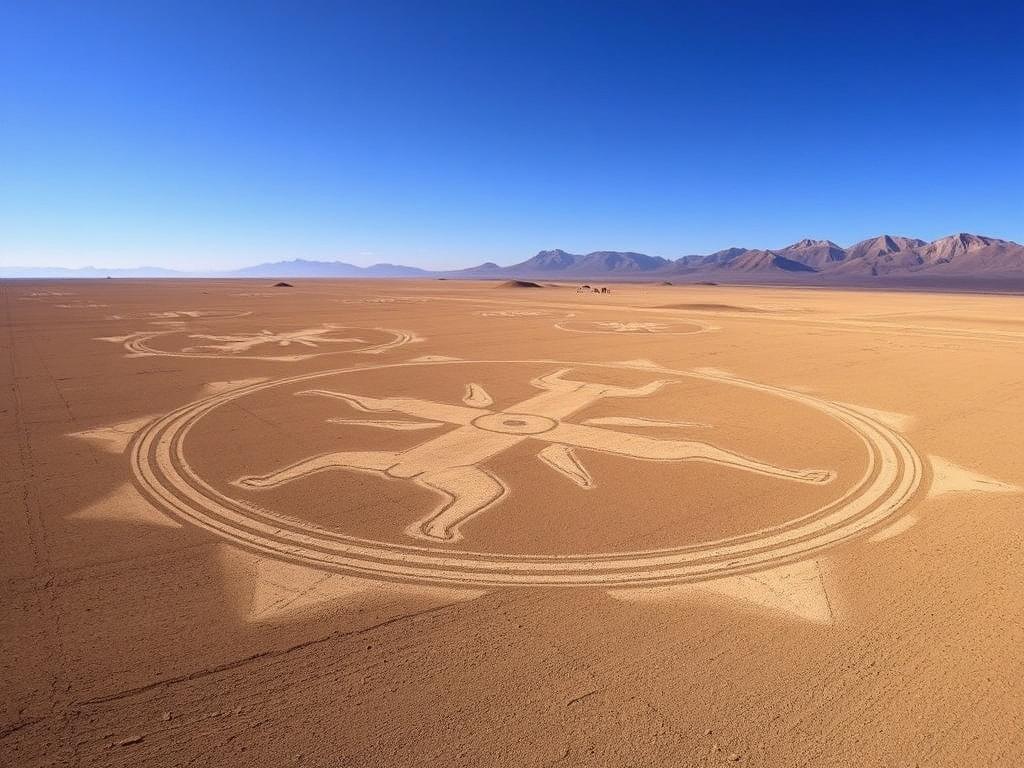
Interpreting iconography requires care: animal figures don’t always mean the animals were worshipped as literal beings, and geometric shapes might represent abstract concepts or functional features. Nazca pottery, textiles, and ceremonial artifacts offer clues. Similar motifs appear across different media, suggesting shared cosmological themes — like a preoccupation with agriculture, water, the sky, and a pantheon of beings that could be human, animal, or hybrid.
Some researchers emphasize continuity between Paracas and Nazca styles, noting that earlier cultures in the region developed imagery that later Nazca artists elaborated. Animals in Nazca art can be stylized, and their repeated use likely reflects symbolic or mythic associations. For example, birds may symbolize the sky and thus relate to rainfall rituals; monkeys and felines might have had other cosmological roles. The “astronaut” figure could be stylized shamanic iconography rather than a literal person in a suit.
Shamanism, Visionary Practices, and Entheogens
One intriguing perspective links some Nazca imagery to shamanic practices and altered states of consciousness. In this model, priests or shamans used sensory deprivation, rhythmic movement, or psychoactive plants to enter visionary states. Their visions could have informed motifs and ceremonies that the lines staged across the landscape. While the idea of entheogens has been discussed, direct evidence is limited; pottery and burials provide hints, but interpretation must be cautious. Even if not literal, the shamanic framework offers a psychological and ritual explanation for why abstract and hybrid figures dominate the repertoire.
Broader Cultural and Environmental Context
The Nazca Lines did not exist in isolation. They were part of an interconnected web of settlements, irrigated fields, and ceremonial centers. The Nazca culture managed irrigation, produced fine ceramics, and created textiles of remarkable complexity. Their economy combined agriculture (with ingenious water management), fishing from the coast, and trade with neighboring regions. The production of geoglyphs likely integrated with these economic and ceremonial life. Community labor might have been organized around seasonal cycles, with construction happening in dry months or after harvests when people could devote time to communal projects.
Environmental conditions also shaped the meaning of the lines. In a harsh landscape, symbolic acts to ensure water, fertility, and social cohesion would be critical. The lines’ permanence on the desert floor made them durable statements — physical markers that tied communities to a sacred topography and possibly to ancestor veneration.
Comparative Examples: Geoglyphs Around the World
Nazca is emblematic but not unique in the human impulse to shape the landscape. Other cultures in the world created large-scale land art and geoglyphs. For example, the Uffington White Horse in England is another famous hillside figure; the Blythe Intaglios in California are North American geoglyphs of human and animal forms; and in the Near East and Central Asia, prehistoric stone alignments and earthworks mark ritual landscapes. Comparing Nazca to these examples helps us see common themes: large-scale art is often sacred, social, territorial, or commemorative, and its scale acts as a message visible across distances or through time.
What Makes Nazca Unique
Despite these parallels, Nazca stands out for the sheer number of figures, the variety of motifs, and the extreme aridity that preserved them. The combination of geometric precision, biomorphic figures, and extensive straight lines gives Nazca a distinctive visual language. The fact that many figures are best seen from above also raises questions about spectatorship and the intended relationship between viewer and artwork that are less pronounced in hillside figures like Uffington.
Open Questions and Ongoing Debates
Even after decades of study, many questions about the Nazca Lines remain open. Here are a few of the pressing debates and areas for future work.
- Chronology and sequence: Who made which figures and in what order? Better dating methods may refine timelines.
- Function multiplicity: Were lines simultaneously ritual pathways, astronomical markers, and social statements? How do we identify overlapping functions?
- Audience and visibility: Were the lines intended for gods, for people on nearby hills, for the dead, or for an aerial perspective?
- Conservation strategies: How can tourism be balanced with preservation, and how will climate change alter protection needs?
- Undiscovered features: What lies beyond the mapped plateau? Technology will likely reveal more geoglyphs and associated structures.
These open questions are exciting because they mean the Nazca Lines are not relics frozen in time but living puzzles that continue to inspire discovery. New interdisciplinary work — combining archaeology, ethnography, geoscience, and digital technologies — is advancing our understanding in ways that would have been unthinkable a few decades ago.
How You Can Follow New Research
If the Nazca Lines captivate you, there are several accessible ways to keep up with research: follow academic journals that publish archaeological studies of the Andes, subscribe to newsletters from Peruvian cultural institutions, and watch for reports from remote-sensing projects. Popular books and documentaries can be engaging but check their sources — credible work will cite peer-reviewed research or reputable institutions.
Conclusion
The Nazca Lines are a remarkable testament to human creativity, social organization, and the power of landscape as a medium for expression. They invite us to imagine ancient hands and eyes working across a sun-baked plateau, to envision rituals for water and fertility, and to appreciate the engineering and aesthetic skill that produced such enduring images. While some mysteries remain — around exact purposes, precise dates, and the full social meanings — recent technologies and careful fieldwork are illuminating ever more of the story. As you think about the hummingbird, the monkey, the condor, and the many lines that lace the plateau, remember they are more than curiosities; they are traces of human life, belief, and memory etched into the earth. They remind us that landscapes can carry stories for millennia, and that those stories are worth protecting, studying, and honoring.