Gabriel García Márquez once said that the world was not like a book but that sometimes a book could make the world look different. That simple observation hints at the power he wielded: a way of telling stories that made ordinary life shimmer with the impossible, and made the impossible feel as commonplace as morning coffee. In this article I want to take you on a long, leisurely walk through the life, work, and aftershocks of García Márquez’s imagination. We’ll look at how magical realism grew into a global literary language, why his novels still resonate, how his journalism and politics shaped his fiction, and how new generations pick up his torch — sometimes to praise, sometimes to push beyond him.
You don’t need to be a literature scholar to enjoy this journey. I’ll keep things conversational and grounded, offering concrete examples, helpful lists and a table that clarifies the major works and themes. If the phrase “magical realism” has always sounded vague or mystical to you, by the end of this piece you’ll find it familiar and insist you’ve seen it in your daily life — because García Márquez taught readers to recognize wonder in the mundane.
Who Was Gabriel García Márquez?
Gabriel García Márquez (often called Gabo) was born in 1927 in Aracataca, Colombia, a town that returned again and again in his fiction as a hub of rumor, superstition and human epic. Raised mostly by his grandparents, García Márquez absorbed the rhythms of story-telling, the names of saints and the cadence of coastal Spanish that colored his sentences with warmth, humor, and melancholy. He trained briefly as a lawyer before embracing journalism, and that reporter’s eye never left him: his scenes are precise, his dialogues feel overheard, and his political instincts are sharp.
García Márquez came to international attention with One Hundred Years of Solitude (1967), a novel that felt like an entire civilization condensed into a family saga. Suddenly, readers in New York, Paris, and Tokyo were reading a story that moved easily between the absurd and the tragic, treating both with equal seriousness. He won the Nobel Prize in Literature in 1982, but prizes only punctuate a career — the real gift he left was a way of seeing.
The Man Behind the Myth
García Márquez was not only a novelist. He spent much of his life as a journalist, writing political columns and long-form features. He believed storytelling could be a form of truth-telling: a journalist’s facts and a novelist’s imagination could coexist in service of a deeper human truth. His friendships with other Latin American writers and political figures shaped his ideas, as did his complicated relationship with Cuba and Fidel Castro. Like any major artist, his life produced contradictions: affection for revolutionary ideals alongside criticism when revolutions betrayed their promises.
What Is Magical Realism?
Magical realism is more than a list of weird occurrences. It’s an aesthetic strategy that weaves the marvelous into the fabric of everyday life, presenting supernatural or extraordinary phenomena as normal, unremarkable events. It refuses to pigeonhole reality into binary categories: the miraculous can be a domestic matter; a death can be foretold in the marketplace; a woman can ascend to heaven while hanging laundry.
This mode differs from fantasy in its grounding. Where fantasy often constructs alternate worlds with internal mythologies, magical realism keeps one foot in the recognizable world. The magic does not interrupt reality so much as reveal hidden layers of it.
Key Characteristics of Magical Realism
- Acceptance of the supernatural as part of ordinary life
- Precise, even journalistic prose that treats miracles with matter-of-fact tone
- Hybridity of time — mythic past and contemporary present are porous
- Cultural specificity — local myths, rituals and language are central
- Political undertones — magic often highlights social injustice or historical trauma
Why the Journalistic Voice Matters
One of the paradoxes of García Márquez’s style is that the more extraordinary the event, the more straightforward the sentence. This journalistic clarity is crucial: it invites readers to suspend disbelief because the narrator acts as a reliable witness. When a character flies, the sentence describing it is sober and detailed. That touch — the sober witness to the fabulous — is a hallmark of García Márquez’s influence on magical realism.
Roots and Influences: Where Magical Realism Came From
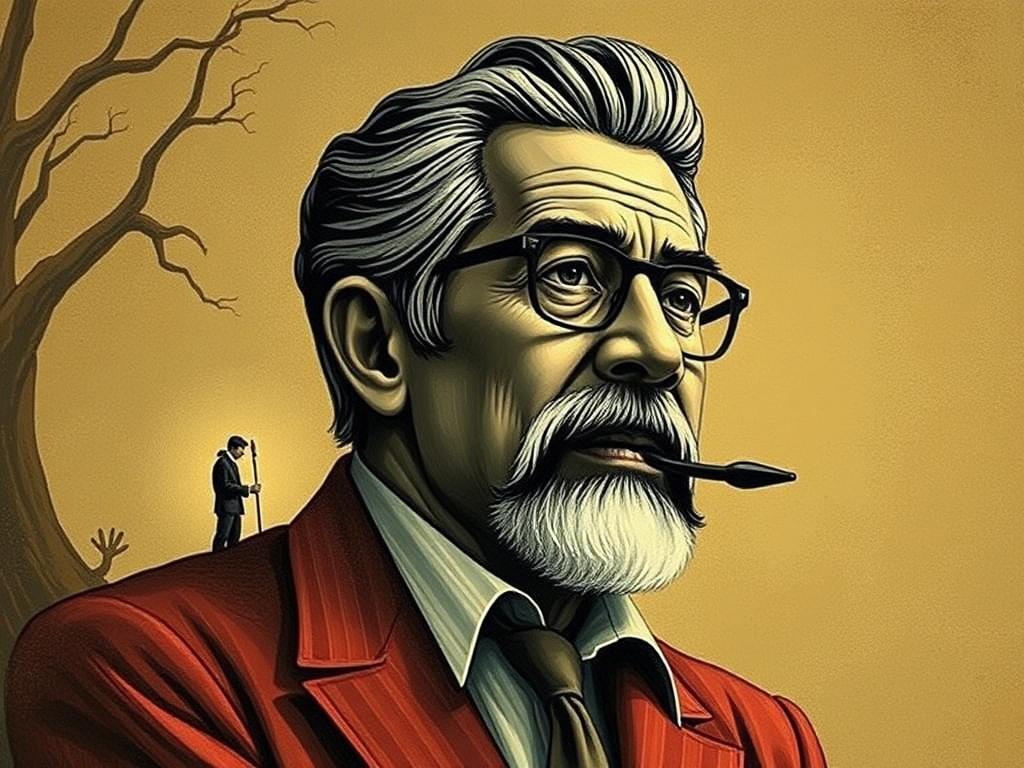
Magical realism did not appear out of nowhere. Its roots are many: indigenous mythologies, African diasporic traditions, Catholic ritual, and the lived reality of colonized peoples where the spiritual and the material coexist. In Latin America, the collision of European historiography and native oral traditions created fertile ground for a literature that could hold contradictions.
European modernism and the Latin American “boom” of the 1960s and 1970s also shaped the movement. Writers such as Jorge Luis Borges, Julio Cortázar, and Alejo Carpentier contributed to a literary atmosphere in which myth, history, and experiment were natural companions. Yet García Márquez’s unique contribution was to combine the rhythms of oral storytelling with a novelist’s structural patience to create novels that felt both intimate and epic.
Historical Context: The Latin American Boom
The “boom” was a period when Latin American writers gained global visibility. Publishing houses in Europe and the United States began translating daring works that blended politics and experiment. García Márquez emerged during this surge, but he also transcended it by creating narratives that were accessible to a wide audience while remaining artistically daring.
Major Works and Their Lasting Power
García Márquez wrote novels, short stories, and journalistic pieces. Some works became cultural touchstones; others are smaller, subtler treasures. Below is a table highlighting several major works, their publication dates, and the core themes that keep readers returning.
| Work | Publication Date | Core Themes | Why It Matters |
|---|---|---|---|
| One Hundred Years of Solitude | 1967 | Family saga, myth, history, cyclical time, solitude | Defines García Márquez’s art; made magical realism a global idiom |
| Love in the Time of Cholera | 1985 | Enduring love, aging, the intersection of romantic myth and reality | Shows García Márquez’s prose tenderness and humanism |
| Chronicle of a Death Foretold | 1981 (originally published in Spanish) | Honor, communal responsibility, the mechanics of rumor | Short, razor-sharp novel that reads like investigative journalism |
| Leaf Storm and Other Stories | 1955 (novella) | Decay, gossip, provincial life | Early demonstration of themes later expanded in One Hundred Years of Solitude |
| News of a Kidnapping | 1996 | Political violence, kidnapping, reportage | Strictly journalistic, demonstrates García Márquez’s investigative rigor |
One Hundred Years of Solitude: A World in a Novel
It’s not an exaggeration to say that One Hundred Years of Solitude changed the map of world literature. It tells the story of the Buendía family over several generations in the mythical town of Macondo. The book moves through births, deaths, prophecies, and absurdities with a buoyant voice that invents a private cosmos, then shows how that cosmos reflects universal human struggles.
What makes it lasting is its ability to operate on many levels: it’s a family epic, a satire of historical amnesia, a love letter to storytelling, and a metaphysical rumination on solitude. Read it as a political allegory or as a book about the small, human gestures that stitch life together — both readings hold.
Love in the Time of Cholera: The Tenderness of Memory
While many know One Hundred Years of Solitude, Love in the Time of Cholera often surprises readers with its quiet power. Instead of the family epic, it focuses on two lives and one protracted, patient love. Magical realism is subtler here — love itself becomes a kind of enchantment. The novel explores how memory sustains desire and how rituals of waiting can be as transformative as any magical event.
Chronicle of a Death Foretold: Journalism as Art
This novella resembles an investigation. The narrator collects testimony to reconstruct the circumstances of a murder everyone knew would happen. The result is a brilliant meditation on collective responsibility, rumor, and the thinness of moral courage in small communities. It’s a perfect example of García Márquez’s hybrid identity: the journalist-novelist at work.
How García Márquez Changed the Way We Tell Stories
Writers today often take for granted the freedom to blend fact and fantasy, history and myth. García Márquez helped normalize that blend. But his legacy is deeper than stylistic influence; it’s ethical and political. He showed that novels could be vessels for memory, a way to preserve histories official archives ignore. By saturating political events with personal myth, he helped readers feel the human cost of policy, war, and displacement.
Political Memory Through Fiction
Magical realism’s ability to hold multiple truths is especially useful in postcolonial contexts where official histories are suspect. García Márquez used fiction to re-member communities — literally reassembling what history had shattered. By doing so, he gave voice to those pushed to the margins of the historical record.
Impact on Language and Tone
García Márquez’s sentences are often long, musical, and richly descriptive, but they are never ornamental for ornament’s sake. His lyrical tendencies serve clarity of image and moral weight. Many contemporary writers borrow his cadences: the long, rolling sentence that carries a surprising truth at its end; the refusal to summarize grief when scene can deliver it instead.
Writers Influenced by García Márquez
The list of writers who acknowledge his influence is long and international. Some took his lessons directly; others transformed them. Here are a few notable names and what they absorbed:
- Isabel Allende — blends family sagas and political histories with a magical flavor.
- Salgado and assorted Latin American novelists — the boom opened doors for diverse voices.
- Salman Rushdie — a different cultural setting but similar playful treatment of history and myth.
- Chinua Achebe and African writers — cross-continental dialogues about postcolonial truth-telling.
- Contemporary global novelists — who use the ordinary-miraculous frame to examine climate, migration, and identity.
The influence is not imitation. Many writers pulled García Márquez’s techniques into their own linguistic and cultural milieux, producing works quite distinct from his but indebted in spirit: a commitment to storytelling’s moral purposes and an insistence that the marvelous can illuminate the political.
Translations, Adaptations, and Global Reception
One reason García Márquez’s reach was so wide is that his translators did remarkable work. The tonal complexity of his prose — humor braided with melancholy, lyricism with bluntness — is exceptionally difficult to render across languages. Yet many translations succeeded in conveying his distinct voice, helping his books find readers in Asia, Africa, and Europe.
Film and theater adaptations have been more uneven. Some filmmakers capture the atmosphere of García Márquez’s novels; others struggle with how to visually represent a reality where miracles are ordinary. Still, adaptations broadened his cultural footprint and brought his stories to people who might never pick up a 400-page novel.
How Translation Shapes Reception
Translation is interpretation. Translators decide what cadence and register to emphasize, which idioms to domesticate and which to preserve. Because García Márquez wrote with so much cultural specificity, successful translators often leaned into that specificity rather than smoothing it. The result is that readers in different languages often experience García Márquez through somewhat different lenses — a richness rather than a problem.
Criticism and Controversy
No literary giant is beyond critique. García Márquez faced criticism on several fronts. Some argued that magical realism simplified complex political realities by aestheticizing suffering. Others objected to his personal politics, particularly his early support for authoritarian leaders, which complicated his reception in some quarters.
Scholars also debated whether magical realism was an authentic expression of Latin American experience or a marketing label applied by Western critics. The answer is complicated: while the label sometimes flattened differences between writers, the aesthetic it described had real roots in the region’s storytelling cultures.
Rethinking the Boom
In recent decades, postboom and postcolonial critics have pushed back against the idea that Latin American literature can be neatly boxed into an era. Newer writers explore migration, urban life, and gender with different tools. That’s healthy: influence is not ownership, and García Márquez’s legacy is strongest when it inspires departure rather than imitation.
Teaching García Márquez: How to Read His Work
If you teach or want to read García Márquez with fresh eyes, here are some approaches that help unlock his texts:
- Read slowly. Let images accumulate instead of summarizing them away.
- Pay attention to lists and names. García Márquez uses naming as a way to connect characters and generations.
- Notice the tone. When the narrator treats the miraculous as ordinary, ask why — what is being normalized and why?
- Contextualize historically. A little knowledge of Colombian history illuminates political references.
- Discuss memory and solitude as social as well as personal conditions.
Classroom Activities
– Have students map the genealogy of a family (such as the Buendías) to see how repetition and variation work as themes.
– Assign a short piece of journalism by García Márquez alongside a short story to compare voice and technique.
– Create a project exploring local myths and writing a “magical realist” scene grounded in contemporary neighborhood life.
Beyond Literature: García Márquez in Popular Culture
García Márquez’s influence goes beyond novels and classrooms. His name adorns cafes, schools, and festivals. References to Macondo appear in music, visual art, and political protests. The idea of the marvelous lodged in everyday life became a shorthand for resilience and creative imagination.
At the same time, there’s a commercial side: “magical realism” is sometimes used as a marketing label to sell books that only lightly adopt its techniques. That dilution is inevitable when a literary idea becomes popular — but it doesn’t diminish the original works’ power.
Digital Age and New Forms
On social media and in digital storytelling, García Márquez’s spirit surfaces in microfiction and illustrated stories that combine everyday detail with an uncanny twist. Young writers remix his strategies to explore migration, identity, and climate grief, proving that his approach remains adaptable and alive.
How Magical Realism Speaks to Our Moment
Why does García Márquez still matter? Partly because his method helps us process complexity. In an age of “fake news” and contested histories, magical realism teaches readers to attend to how truth is constructed: who tells the story, what is omitted, what is remembered. It refuses to serve simplistic binaries and instead encourages a layered understanding of cause and consequence.
Moreover, magical realism offers a language for expressing grief, resilience, and wonder simultaneously. In communities facing displacement, climate change, and political turbulence, the ability to narrate loss and enchantment together is not luxury — it’s survival.
Contemporary Issues through a Magical Realist Lens
– Migration: The border becomes a site where myth and policy collide. Magical realist tales can humanize migration by linking personal histories with communal memory.
– Climate change: The environment’s quiet rebellions — floods, heat, disappearing species — can be narrated as small miracles or curses in ways that convey emotional truth beyond statistics.
– Pandemic: When public health crises bend time and ritual, blending the lived and the surreal, magical realism offers a vocabulary for chronicling human adaptation.
Practical Guide: Where to Start Reading García Márquez
If you’re new to his work, here’s a suggested path to savor his writing without rushing:
- Begin with the novella Chronicle of a Death Foretold — short and brilliant, it showcases his investigative voice.
- Read One Hundred Years of Solitude slowly — savor the family history and allow the novel’s time to fold.
- Try Love in the Time of Cholera for a different register: a love story that uses lyricism rather than cosmic satire.
- Explore his journalism in collections like News of a Kidnapping to see his factual, unsentimental prose.
Recommended Further Reading
| Book | Why Read It |
|---|---|
| One Hundred Years of Solitude | It’s a foundational work that shows García Márquez at his narrative height. |
| Love in the Time of Cholera | A meditation on time, aging, and love’s persistence. |
| Chronicle of a Death Foretold | Short, accessible, and sharp — great as a first step. |
| News of a Kidnapping | Shows García Márquez’s journalistic rigor and political concern. |
| Collected Short Stories | Offers glimpses of his imagination in compact form. |
Common Misunderstandings About Magical Realism
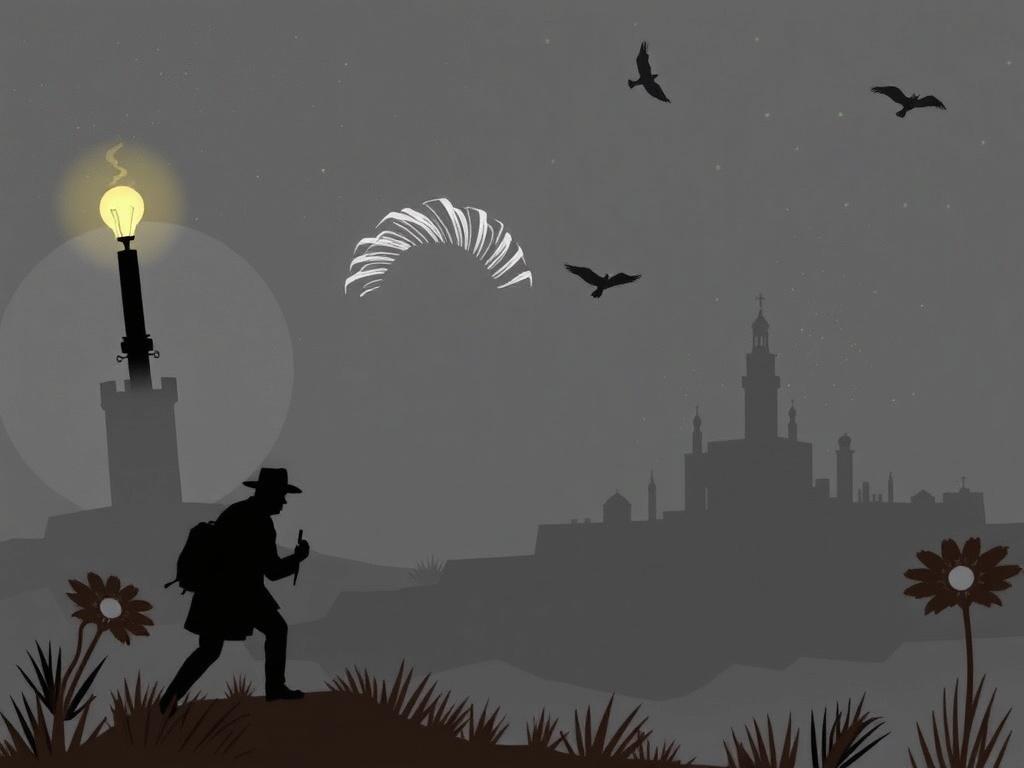
It’s worth correcting a few persistent myths:
- Myth: Magical realism is just escapism. Truth: It often confronts harsh realities by rendering them emotionally accessible.
- Myth: It’s only Latin American. Truth: While rooted in specific traditions, the technique has been adapted globally.
- Myth: It lacks political bite. Truth: Magical realism frequently highlights injustices by making the hidden visible.
A Note on Cultural Ownership
Because magical realism became associated with Latin America through García Márquez and his contemporaries, it’s often treated as a regional signature. That’s understandable, but we should avoid boxing creative strategies into ownership. Literary techniques travel, adapt, and renew across cultures. The respectful way to honor García Márquez is to let his example inspire new, locally rooted work rather than to reduce his art to a marketable label.
The Ethical Imprint of Storytelling
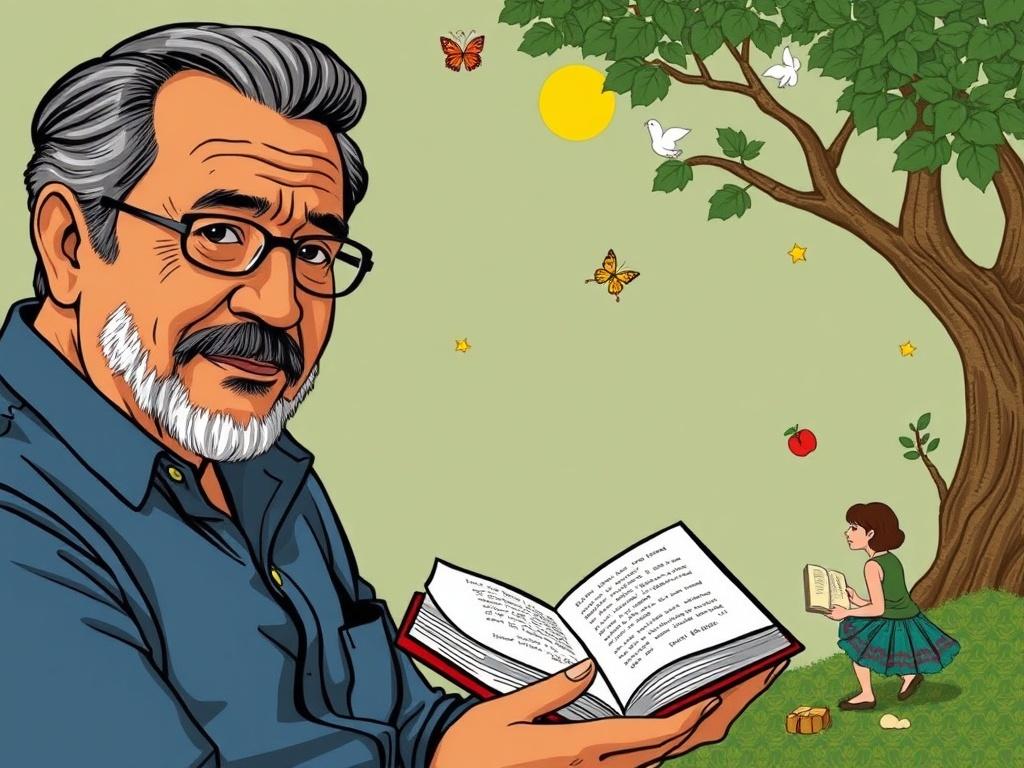
García Márquez didn’t just change style — he shaped how writers think about responsibility. He believed stories could preserve dignity against erasure. In his best moments, his books are acts of witness: they attend to the small human details that official histories omit. That ethical dimension is part of his legacy: storytelling as moral labor.
Storytelling and Memory
Memory, in García Márquez’s fiction, is communal. It’s passed along by gossip, ritual, and the stubborn refusal to let events be forgotten. This collective memory is often embodied in the town of Macondo, which acts as a palimpsest for historical trauma and familial repetition. Readers are invited to consider how their own communities remember and what stories they choose to keep alive.
Where García Márquez’s Influence May Go Next
Writers are already riffing on his techniques in ways he might not have expected: blending science fiction with magical realism to address climate futures, using digital media to weave collective folktales, and creating hybrid genres that resist neat categorization. The future of his influence is not repetition but mutation: the core impulse to combine wonder with the factual will continue to find new forms.
Emerging Forms
– Digital serial fiction that uses real-time updates to echo García Márquez’s episodic narrative rhythms.
– Graphic novels incorporating magical realism’s imagery to visualize the ordinary-miraculous blend.
– Community oral histories that adopt fantastical framing to protect identities while testifying to lived truths.
Practical Exercises for Writers Inspired by García Márquez
Try these exercises if you want to practice magical realist techniques:
- Write a scene where an ordinary object behaves in a subtly impossible way (a clock that remembers the dead, for example). Keep the narrator’s voice sober.
- Compose a family chronicle in which names repeat across generations. Notice patterns and let them become thematic anchors.
- Take a real historical event and write a short vignette that introduces a small magical detail that reframes the event emotionally.
Final Reflections
García Márquez’s books are as pleasurable as they are morally serious. They invite readers to enjoy language but also to attend to the ways the world forgets the visible suffering of ordinary people. He gave readers a map for rediscovering wonder without losing sight of political reality.
When you read him, you encounter a creator who trusted the reader’s intelligence and imagination. He expected you to feel both surprise and recognition — the hallmark of a writer who believes in the human capacity to hold contradictions. That ability to hold contradictions is perhaps the greatest part of his legacy: a call to see the ordinary world with fresh eyes, and to care more deeply for the stories that make us who we are.
Conclusion
Gabriel García Márquez’s legacy is a living one: an invitation to mix the factual and the fantastic to better understand human life, a demonstration that storytelling can preserve memory and hold political truth, and a stylistic gift that urges writers and readers to notice the miraculous threaded through everyday existence; his work remains a testament to the power of narrative to transform grief into meaning, history into myth, and individual lives into the collective story we all tell about who we are.