
The Amazon feels like a place from a fairy tale: endless green, a river that flows like a silver spine, and sounds at dawn that can wake your bones. But it is not a myth. It is an enormously complex, living system that supports a staggering diversity of life and underpins climates and livelihoods across continents. In this article I want to walk you through what the Amazon is, why its biodiversity matters so much, what threatens it, and what we can realistically do to protect it. I’ll keep things conversational and try to make the science and the politics feel approachable — because what happens in the Amazon affects every one of us.
Let’s start with scale and place. Too many stories treat the Amazon as a single blob of green when in reality it is a mosaic of forests, rivers, wetlands and human cultures stretching across national borders. Appreciating that complexity helps us see both the wonder and the fragility of what’s at stake. I’ll unpack layers of life — from towering trees to invisible microbes — and then move into the hard conversations about deforestation, fires, mining, and climate change. Finally, I’ll explore the solutions that already exist and the actions people can take, from policy to personal choices. Stay with me — by the end you’ll have a clear picture of why understanding the Amazon’s biodiversity and threats matters, and what meaningful steps look like.
Where the Amazon Is and Why It Matters
The Amazon Basin covers a massive portion of South America. It stretches across Brazil, Peru, Colombia, Venezuela, Ecuador, Bolivia, Guyana, Suriname, and French Guiana. When people say “the Amazon,” they are often referring to the rainforest — but the basin also includes rivers, floodplains, savannas, and a variety of wetland systems. The Amazon River itself is one of the world’s longest and strongest, and its tributaries create a vast, shifting aquatic network that nourishes the forest and connects animals and people.
Why does the Amazon matter beyond national borders? First, it stores and cycles enormous amounts of water and carbon. The forest pumps moisture into the atmosphere, influencing rainfall patterns locally and in distant regions — Brazil’s agricultural heartlands rely in part on Amazon-derived rains. Second, the Amazon holds an estimated 10% of the world’s known species, a number that becomes even more meaningful when you remember how many of those species are found nowhere else on Earth. Third, it supports millions of people, including indigenous communities whose cultures and livelihoods are woven into these landscapes. Finally, as a major carbon reservoir, the Amazon influences the global climate system. When the forest is degraded, its ability to store carbon weakens and climate impacts ripple outward.
The scale of the forest
Numbers help. The Amazon rainforest covers roughly 5.5 million square kilometers (about 2.1 million square miles) of tropical forest. The entire Amazon Basin is even larger — around 6.7 million square kilometers when you include all the watersheds. This makes it the largest tropical rainforest on Earth, and one of the planet’s most important climates and biodiversity regulators.
Scale also means complexity. The forest is not a uniform wall of trees; it includes terra firme forests that rarely flood, várzea and igapó forests that flood seasonally, and white-sand forests with unique plant communities. Those differences create specialized habitats where certain plants and animals thrive. The rainforest’s vertical structure — emergent trees rising above a dense canopy, an understory of shade-loving plants, and a litter layer that teems with insects and fungi — also multiplies the niches available for life.
Climate and the water cycle
The Amazon is a moisture machine. Trees draw water from the soil and release it through transpiration; this moisture contributes to cloud formation and rainfall. It’s often said that the Amazon creates its own rains, and while that’s a simplification, there’s truth in it: moisture recycled through vegetation supports rainfall patterns that extend across South America. Deforestation reduces this recycling and can weaken regional rainfall, threatening agriculture even far from the forest.
The Amazon River and its tributaries are a global freshwater treasure. They discharge a huge volume of water into the Atlantic Ocean and sustain seasonal floodplains that are biological hotspots. Changes in precipitation patterns, whether from deforestation or climate change, can alter river flows and the ecological rhythms that species and people depend on.
Biodiversity: Life in Every Layer
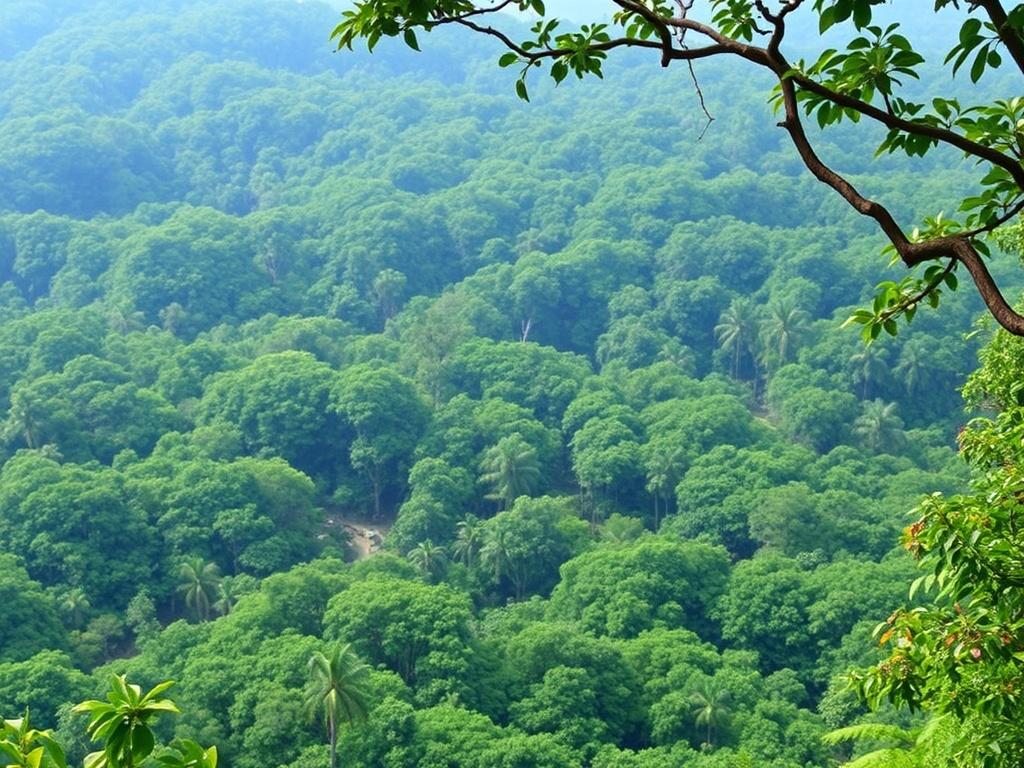
If the Amazon were a book, its pages would be written in species. From giant kapok trees to microscopic protists, life in the Amazon is abundant, often surprising, and frequently still unknown to science. The diversity is not just in species count, but in the complexity of interactions — pollination webs, predator-prey dynamics, nutrient cycling, and symbioses between plants and fungi or bacteria. Understanding this web is essential because the loss of one piece can reverberate across the whole system.
Biodiversity in the Amazon isn’t only valuable for beauty or curiosity. It delivers concrete ecosystem services: pollination for crops, natural pest control, sources of medicines, genetic diversity that can inspire agricultural resilience, and cultural value for indigenous and local peoples. Recognizing these services helps shift the conversation from “wilderness” as an abstract ideal to a vital, functioning system that supports human well-being.
Plants: the green giants and tiny saints
Trees define the forest’s silhouette, but plants range from towering emergent trees like Ceiba and Brazil nut trees to delicate orchids clinging to branches. The Amazon is home to tens of thousands of plant species. Many are keystone species — their presence helps structure entire communities — while others are locally rare and specialized to unique soils or microclimates.
Plants in the Amazon have impressive strategies: some produce fruits designed for monkeys and birds to disperse their seeds, others rely on wind or water. Many form relationships with fungi (mycorrhizae) that help them access nutrients in poor soils. These partnerships are invisible yet fundamental: without them, many trees would struggle to gather phosphorus and nitrogen.
Animals: from jaguars to tiny frogs
Large animals like jaguars, tapirs, and macaws capture imagination and play vital roles in ecosystems. Jaguars are apex predators that help regulate prey populations; tapirs disperse seeds of large-fruited trees across the forest; macaws can be indicators of healthy forest structure. Meanwhile, amphibians — including many colorful poison-dart frogs — are sensitive to environmental changes and serve as early warning signals for ecosystem stress.
Bird diversity is astonishing: the Amazon hosts thousands of bird species with specialized niches — hummingbirds hovering at bright flowers, harpy eagles hunting in the canopy, and tinamous scratching the forest floor. Mammals include not only iconic species but also many bats and rodents that are crucial pollinators and seed dispersers. Freshwater fish add another dimension: the Amazon basin is one of the most species-rich freshwater systems in the world, with fishes adapted to seasonally flooded forests and blackwater environments.
Insects, fungi, and microbes: the overlooked majority
If you peel back the visible layer of trees and mammals, the real engines of the forest’s cycles hum quietly: insects, fungi, and microbes. Beetles, ants, and termites process dead wood and leaf litter, returning nutrients to the soil. Pollinating bees and moths enable reproduction for a multitude of plants. Fungi break down complex organic matter and facilitate nutrient exchange between roots. Microbial communities in the soil control nitrogen availability and decompose organic matter, shaping plant growth.
These groups contain many undescribed species. Insects alone may account for a large fraction of the Amazon’s undescribed biodiversity. That’s both thrilling and worrying: we’re losing species before they are formally documented, and we’re losing functional diversity that keeps the system resilient.
Indigenous Peoples and Human Dimensions
The Amazon is not a wilderness devoid of people; it is home to hundreds of indigenous and local communities that have stewarded the land for millennia. These communities possess deep ecological knowledge — about medicinal plants, seasonal cycles, and sustainable harvest techniques — and many have managed landscapes in ways that preserve biodiversity. Indigenous territories often act as de facto protected areas, with lower deforestation rates than surrounding lands when rights are respected.
Understanding the human side of the Amazon is essential. People depend on forest resources for food, medicine, and cultural practices. At the same time, social pressures, economic incentives, and external actors — national governments, corporations, illegal loggers — shape how land is used. Effective conservation must therefore blend ecological science with respect for human rights and community leadership.
Traditional knowledge and stewardship
Traditional ecological knowledge is not anecdote; it is practical science accumulated over generations. Indigenous communities know which plants heal, which fruits ripen in which months, and how to manage fires and hunting sustainably. Collaborative projects that combine scientific research with indigenous knowledge often yield better conservation outcomes than top-down interventions.
Securing indigenous land rights is one of the most effective conservation measures. Evidence shows that deforestation rates are consistently lower in lands managed by indigenous peoples and local communities. This is because many traditional management systems balance use with conservation, maintaining habitat connectivity and biodiversity.
Population trends and pressures
Population dynamics in the Amazon are complex. Some areas see urban growth and migration towards frontier towns tied to logging, ranching, and mining. Other regions have longstanding indigenous communities with stable populations. Economic pressures, weak governance, land speculation, and inadequate enforcement can drive rapid land-use change. Understanding how people move, make livelihoods, and relate to land is crucial for designing policies that protect both people and nature.
Threats to the Amazon
The Amazon faces multiple, interacting threats. No single cause explains the forest’s decline; it is the combination of drivers — legal and illegal — that is most dangerous. Let’s take these major threats one by one, and then consider how they compound each other.
Deforestation: the big driver
Deforestation is the conversion of forest to other land uses. In the Amazon it is driven largely by agriculture (both large-scale and smallholder), cattle ranching, soy cultivation, and infrastructure expansion. Logging, both legal and illegal, opens roads that facilitate further conversion. As forest patches shrink and become fragmented, edge effects (changes in light, temperature, and humidity at forest edges) alter habitats, making them less hospitable for interior species and more prone to fires.
Economics play a central role: short-term profits from timber, cattle, or crops often outweigh the perceived, longer-term value of intact forest. Weak land tenure systems and incentives for clearing land for “productive” uses have accelerated loss. Additionally, political decisions and law enforcement influence rates of deforestation over time.
Fires as a tool and a disaster
Fire is not historically a major natural disturbance in many parts of the Amazon, but humans use fire to clear land for agriculture. During droughts — whether driven by El Niño events or climate change — fires can escape into forests, causing large-scale damage. Smoke from fires also poses human health risks and contributes to regional air pollution. As more forest is fragmented and dried, the landscape becomes increasingly flammable, creating feedback loops where small fires can trigger larger ecosystem shifts.
Mining, oil, and extractive industries
Mining and oil extraction bring pollution, roads, and influxes of workers. Mercury used in small-scale gold mining contaminates waterways, affecting fish and people who depend on them. Oil spills and pipeline leaks can devastate localized areas of forest and disrupt indigenous livelihoods. These activities also create social pressures and often bypass environmental regulations, leading to long-term degradation.
Infrastructure, dams, and fragmentation
Roads, dams, and urban expansion fragment habitats and create access routes for further development. Dams alter river flows and drown large areas of forest, especially in floodplain ecosystems, changing aquatic and terrestrial habitats. Roads often precede deforestation: they make remote areas accessible to loggers, farmers, and miners.
Climate change and tipping points
Climate change adds a systemic stress. Rising temperatures and shifting rainfall patterns can push parts of the Amazon toward drier conditions, reducing its resilience. Scientists warn of potential tipping points: thresholds beyond which large areas could shift from rainforest to savanna-like landscapes, releasing stored carbon and further amplifying global warming. This is not the only risk to watch for, but it’s an existential one.
Illegal activities and weak governance
Illegal logging, land grabbing, and unregulated agricultural expansion feed deforestation. Where governance is weak, enforcement is sporadic, and corruption can accelerate environmental harm. Addressing illegal activities requires governance reforms as much as conservation planning.
Consequences of Losing the Amazon
The loss of the Amazon would be tragic in many dimensions — ecological, climatic, cultural, and economic. The consequences are not hypothetical; in already-degraded areas we see reduced rainfall, biodiversity declines, soil erosion, and collapses in local livelihoods. Below are some of the major consequences to consider.
Carbon emissions and global climate impacts
Intact forests store carbon in living biomass and soils. When forests are cleared or burned, that carbon is released into the atmosphere as CO2, contributing to global warming. Large-scale forest loss in the Amazon could transform a global carbon sink into a carbon source, accelerating climate change. Even localized releases contribute to a cumulative global burden that affects weather patterns, sea level, and extreme events.
Loss of biodiversity and ecosystem services
Species extinctions remove unique evolutionary lineages and reduce ecosystem functions. Pollination services, pest control, water purification, and soil stabilization can all decline when ecosystems are simplified. The loss of potential medicines — many pharmaceutical compounds originate from rainforest species — is also a long-term cost that rarely factors into short-term land-use decisions.
Impacts on people and cultures
Indigenous peoples and local communities lose more than resources when forests are destroyed; they can lose homes, sacred sites, and cultural identity. Food security and health are threatened by pollution, reduced fish stocks, and the loss of medicinal plants. Forced migration to urban areas can create social tensions and economic hardship.
Conservation and Solutions — what’s being done
Although the challenges are enormous, there are many hopeful and practical solutions. Some are technological — satellite monitoring for rapid deforestation alerts — while others are social or political, such as strengthening indigenous land rights. Successful strategies often combine multiple approaches and work at different scales: local, national, and international.
Below is a brief table that summarizes common conservation strategies, how they work, and the challenges they face.
| Strategy | How it works | Challenges |
|---|---|---|
| Protected areas | Legal protection of land from development to preserve habitats | Requires enforcement, funding, and community support |
| Indigenous land titling | Recognizes indigenous territories and management rights | Political resistance and land conflicts can delay implementation |
| REDD+ and payments for ecosystem services | Financial incentives to reduce emissions from deforestation | Complex accounting, needs fair benefit sharing |
| Supply chain commitments | Companies pledge to source commodities free of deforestation | Traceability and enforcement are difficult across complex supply chains |
| Restoration and reforestation | Active planting and ecological restoration to rebuild habitats | Costly, long-term commitment needed to ensure success |
| Scientific monitoring and technology | Satellites, drones, and field science to detect and research change | Data needs to translate into policy and action |
Protected areas, indigenous territories, and community management
Protecting land is foundational. When protected areas are well-managed and include local communities in decision-making, they can maintain biodiversity and livelihoods. Indigenous territories, in particular, have demonstrated strong conservation outcomes when rights are clear and communities are empowered. Community forest management — where locals sustainably harvest forest products — can be an effective middle ground between complete preservation and destructive exploitation.
Policy tools: REDD+, payments for ecosystem services
REDD+ (Reducing Emissions from Deforestation and Forest Degradation) aims to create financial incentives for forest conservation by monetizing carbon storage. Payments for ecosystem services (PES) more broadly compensate land stewards for conserving watershed services, biodiversity, or carbon. These programs can align economic incentives with conservation goals, but they require robust monitoring, transparent governance, and equitable benefit distribution to be successful.
Private sector and supply chain actions
Many companies buy commodities produced in the Amazon — beef, soy, timber, and palm oil, among others. When major buyers commit to «no deforestation» supply chains and invest in traceability, they can reduce pressure to clear land. But voluntary commitments must be coupled with monitoring, independent verification, and support for producers to adopt sustainable practices if they are to be credible.
Science, monitoring, and technology
Technology has transformed our ability to track the Amazon. Satellites provide near-real-time alerts of forest loss, helping enforcement agencies and NGOs respond quickly. Drones and acoustic sensors can monitor biodiversity in remote areas. Citizen science and participatory monitoring, where local communities collect data, blend local knowledge with scientific methods and empower stakeholders.
How individuals can help
You don’t need to be a head of state to make a difference. Individual choices, when made broadly, influence markets and politics. Here are practical steps individuals can take:
- Buy responsibly: choose products with credible sustainability certifications and ask where your food comes from.
- Support organizations that protect forests and indigenous rights through donations or volunteerism.
- Reduce meat consumption: cattle ranching is a major driver of Amazon loss; lowering demand can reduce pressure.
- Use your voice: contact representatives to support strong environmental policies and international cooperation.
- Educate others and support citizen science projects that monitor biodiversity and deforestation.
Each action is small alone, but large when multiplied across millions of consumers and voters. Market signals matter: when consumers demand deforestation-free products, companies respond.
Case studies: stories of success and alarm
Concrete examples help us understand what works and what goes wrong. In some regions, strong indigenous land rights and community enforcement have dramatically reduced deforestation rates. In others, policy shifts and budget cuts for environmental agencies have led to alarming spikes in forest loss. Restoration projects — where degraded pasture is actively replanted with native species — have shown that landscapes can recover, though recovery takes time and careful ecological planning.
Consider the story of a community-run forest reserve that combined traditional stewardship with satellite monitoring and a partnership with an international NGO. The result: lower illegal logging, better income through sustainable harvesting of non-timber products, and stronger community governance. On the other hand, areas where roads were built into pristine forest often became deforestation hotspots, illustrating how infrastructure can be a catalyst for ecosystem loss if not carefully managed.
Looking forward: scenarios and hope
Scientists model futures for the Amazon ranging from optimistic to dire. The optimistic scenarios pair strong governance, recognition of indigenous rights, reduced commodity-driven deforestation, and aggressive global climate action. In these worlds, the Amazon remains largely intact or recovers in strategic areas. Pessimistic scenarios combine continued high rates of deforestation, weak law enforcement, and severe climate change, pushing parts of the forest toward a savanna-like state.
Which future unfolds depends on policy choices, market trends, technological innovation, and social movements. The good news is that many of the tools needed to move toward better outcomes already exist. They need funding, political will, and broad public support. International cooperation matters — climate goals and trade policies intersect with forest conservation. And local leadership matters most: communities that live in and around the forest are the most invested in its future.
Practical frameworks for a durable solution
Solving the Amazon’s challenges requires integrated, multi-level approaches. Below is a short list of practical frameworks that, when implemented together, can build resilience:
- Secure land tenure for indigenous and local communities to empower stewardship.
- Strengthen enforcement against illegal logging and land grabbing with better monitoring and judicial action.
- Incentivize sustainable agriculture and provide technical support for low-deforestation practices.
- Invest in restoration of degraded lands rather than converting primary forest.
- Align international finance and trade policies to penalize deforestation-linked commodities and reward sustainable supply chains.
- Support community-based monitoring and incorporate traditional knowledge into conservation planning.
Rather than seeing these as isolated ideas, think of them as complementary pieces of a strategy that addresses economic drivers, governance, and ecological restoration simultaneously.
Frequently asked questions about the Amazon (short answers)
Is the Amazon already past a tipping point?
Not yet as a whole, but some regions are at higher risk. Scientists worry that continued deforestation combined with warming and drying could push parts of the basin past thresholds where recovery is much harder.
Can reforestation replace old-growth forest?
Reforestation can restore many ecosystem functions over time, but old-growth forests have unique structural complexity and biodiversity that can take centuries to fully recover. Protecting intact forest is always preferable.
Do indigenous territories really help conserve forests?
Yes. Multiple studies show indigenous-managed lands often have lower deforestation rates than surrounding areas, especially when rights are legally recognized and supported.
What role do consumer countries play?
Consumer countries influence demand for commodities produced in the Amazon. Trade policies, corporate purchasing standards, and public pressure in consuming nations can drive changes in land-use practices.
Final reflections
The Amazon is a living system of breathtaking scale and subtlety: a place where species interactions weave complex tapestries and where human cultures have co-evolved with nature for millennia. Its future is not predetermined. We live at a moment where choices — in markets, in parliaments, and in daily life — will steer whether the Amazon remains a refuge for biodiversity and a stabilizer of climate, or slides toward irreversible degradation. The path forward is messy and political, requiring justice for indigenous peoples, smarter economic incentives, better governance, and a cultural shift that values long-term stewardship over short-term extraction. But there is room for hope: many local communities, scientists, policymakers, and businesses are already working to protect and restore this vital region. Understanding the Amazon’s biodiversity and the threats it faces is the first step toward becoming part of the solution.
Conclusion
The Amazon rainforest is much more than a distant green ocean; it is a dynamic, richly interconnected system that sustains countless species, regulates regional and global climates, and supports human cultures and livelihoods — and yet it faces mounting threats from deforestation, fires, extractive industries, infrastructure, and climate change; protecting it requires integrated strategies that secure indigenous rights, enforce against illegal activities, shift global market incentives, and invest in science and restoration, and each of us can contribute by making informed consumer choices, supporting credible initiatives, and advocating for policies that place long-term ecological and social well-being above short-term gains.