Imagine standing on the rim of a massive plaza, the air thick with the smell of maize, incense, and distant smoke from braziers. A priest intones ancient chants while craftsmen, soldiers, and farmers move around a city that hums with organization and life. Hundreds of miles away, high in the cloud-slashed Andes, terraces cling to steep slopes and roads thread through mountains to connect a far-flung empire. Two of the most remarkable civilizations the Americas ever produced—the Aztec and the Inca—built worlds that astonish us still. Their stories are full of brilliance, brutality, innovation, and complexity, and they help us understand how societies rise, adapt, and sometimes fall in the face of immense change.
In this article I’ll guide you through the intertwined histories of the Aztec and Inca empires: how they began, how they organized life, the beliefs that shaped them, the art and infrastructure they left behind, and the cataclysmic arrival of Europeans that would change everything. We’ll compare their political systems, economies, religions, and military systems, and look at their legacies in modern Latin America and beyond. This is not a dry chronology; it’s an exploration of people who built powerful states with intelligence, compassion, cruelty, inventiveness, and stubborn resilience.
Getting Started: Geography and Origins
To understand these empires, start with place. The Aztecs rose in the Valley of Mexico, a highland basin dotted with lakes, including the great Lake Texcoco. Their capital, Tenochtitlan, was founded on an island and eventually became one of the largest cities in the world in the early 16th century. The environment was a patchwork of marshes, chinampas (man-made agricultural islands), and potable water sources, and the Aztecs mastered these resources.
By contrast, the Inca Empire, Tawantinsuyu in Quechua, sprawled along the western spine of South America, stretching from modern Ecuador down to central Chile and across into Argentina. Centered in Cusco, the Incas ruled harsh mountain landscapes, arid coastal deserts, and fertile valleys. They built terraces, irrigation systems, and one of the most extensive road networks of the premodern world to knit their territories together.
How They Began
The Aztecs (or Mexica, their own name) arrived as migratory groups in the 12th to 13th centuries. They were not initially dominant; they were one among many peoples in the Valley of Mexico. Over a few centuries, through strategic alliances, warfare, and trade, they came to lead the Triple Alliance with Texcoco and Tlacopan, forming the core of what history remembers as the Aztec Empire centered on Tenochtitlan.
The Incas, on the other hand, were initially one of several Andean chiefdoms. Their rise is often linked to the 13th–15th centuries when a series of energetic rulers from the Cusco region consolidated power through military conquest, statecraft, and the integration of diverse peoples. By the time the Spanish arrived in the early 1530s, the Inca state had become a tightly organized, hierarchical empire.
Political Organization and Governance
Both empires were centralized but differed in how they exercised power. The Aztecs relied on a mixture of tribute, client rulers, and a military elite. The ruler—known as the Huey Tlatoani—was a semi-divine figure whose legitimacy rested on lineage, military victory, and ritual authority. The imperial structure was flexible: city-states (altepetl) retained local rulers so long as they paid tribute and supported the Aztec political agenda.
The Inca system was more bureaucratic. The emperor, Sapa Inca, was treated as the living descendant of the sun god Inti and organized the empire through direct administration, a class of state officials, and an economy that redistributed resources rather than relying primarily on tribute. The Incas imposed administrators and colonists in newly conquered regions, spoke Quechua as an administrative lingua franca, and used the mit’a labor draft to mobilize people for public works and military service.
Administrative Tools: Tribute vs. Redistribution
Tribute defined Aztec power. Conquered city-states sent goods—cacao, cotton, foodstuffs, precious feathers, and human captives—back to Tenochtitlan. These supplies funded the state’s religious ceremonies, fed elites, and maintained the army. Tribute lists became public displays of power: stone monuments and pictorial codices listed what each province owed.
The Incas developed a more systematized state economy. The term «redistribution economy» captures how production was centrally stored and reallocated. State warehouses held textiles, grain, and other goods. When disaster struck a region, the state could deploy stored resources; when new projects were planned—like road-building or terrace construction—labor was corralled through mit’a and provisions were supplied from stores.
Religion and Cosmology
Religion was the heartbeat of both empires but it expressed different emphases and rituals. Aztec religion was polytheistic and famously intense in its ritual practice. Gods like Huitzilopochtli (sun and war), Tlaloc (rain), and Quetzalcoatl (feathered serpent, culture hero) occupied overlapping roles. Human sacrifice—while often sensationalized in European accounts—was an integral part of cosmic maintenance for the Aztecs. They believed the gods required nourishment in the form of blood and hearts to keep the sun moving and the world balanced.
The Inca pantheon revolved around Inti, the sun god, and Viracocha, the creator god. The Incas were also deeply animistic, honoring mountain spirits (apus) and natural forces. While the Incas did practice human sacrifice—most famously the capacocha ritual, which involved children sacrificed on mountain summits—these rituals differed in frequency and practice from the Aztec sacrificial cult. Inca religion was tightly integrated with the state; rulers performed rituals to reaffirm their divine mandate and to sanctify state projects.
Priesthoods and Religious Architecture
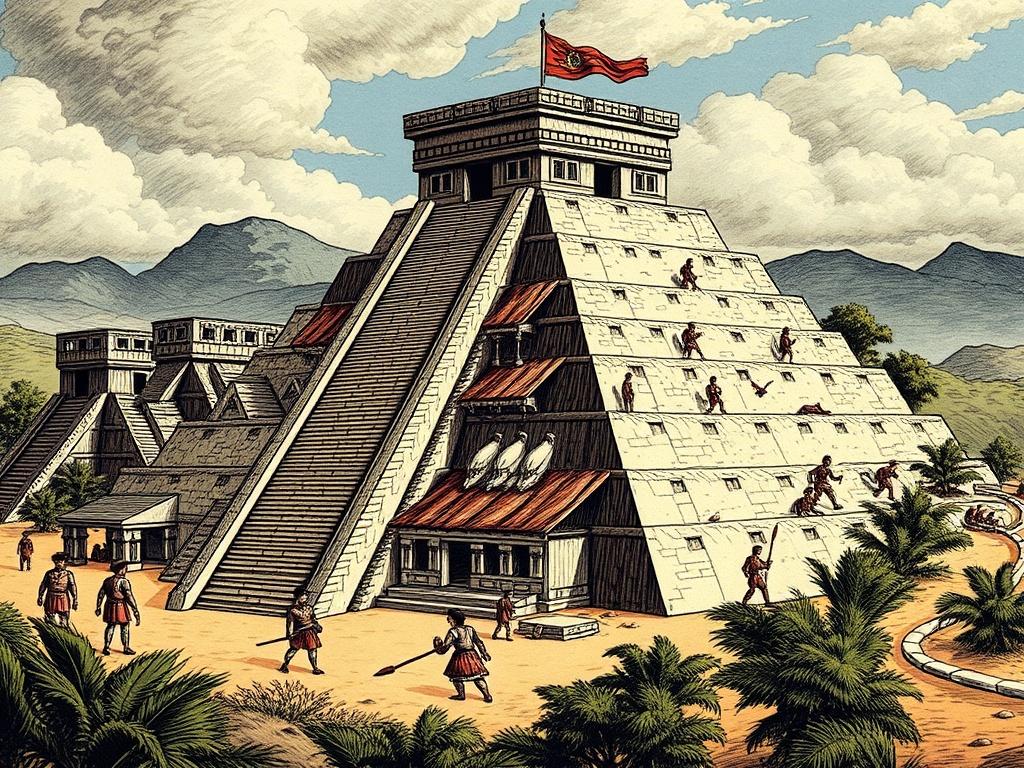
In both empires, a specialized priesthood managed complex calendars, astronomical observations, and rituals. Temples and ceremonial centers anchored urban life. The Aztec Templo Mayor in Tenochtitlan, with twin shrines for Huitzilopochtli and Tlaloc, was a focal point for the empire. Its terraces, platforms, and sacrificial spaces broadcast Aztec piety and power.
The Incas built temples such as the Coricancha in Cusco, richly adorned with gold to mirror the sun’s brilliance. Sacred architecture was not merely symbolic; it integrated cosmology into urban planning. The Incas often aligned structures and roads with astronomical points and mountain vistas, anchoring their spirituality in the landscape.
Economy, Agriculture, and Technology
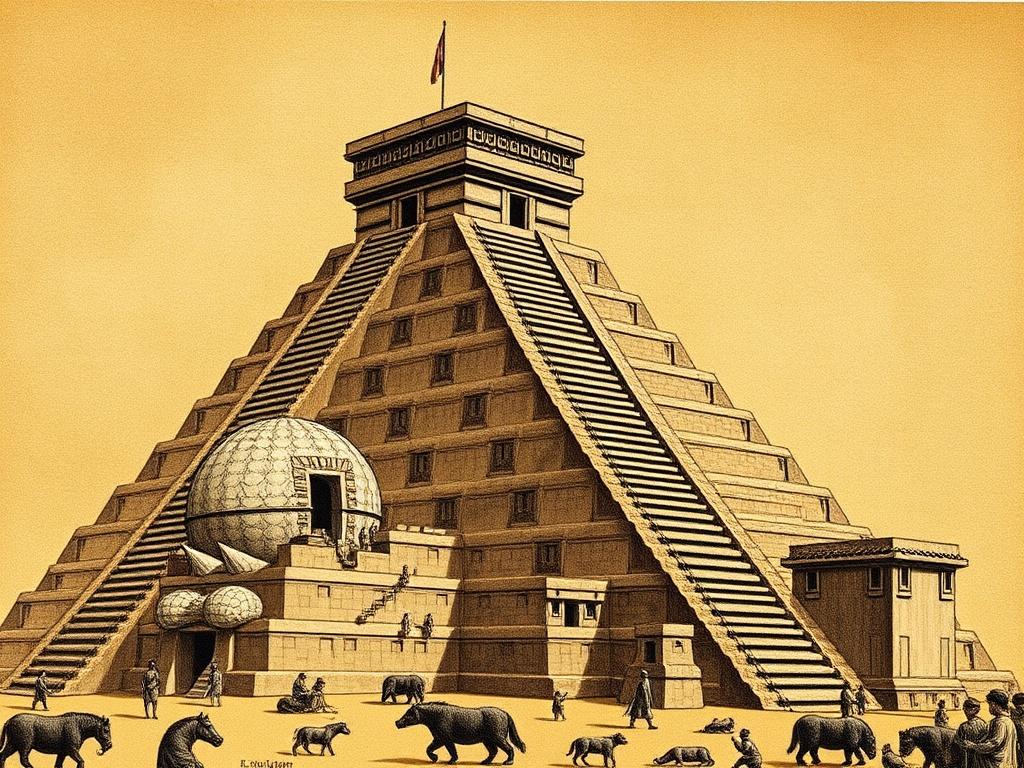
Not all empires match the same economic script. The Aztecs excelled in urban agriculture and trade. The chinampa system—artificial islands made from mud and vegetation—created extremely productive plots that sustained dense urban populations. Markets in Tenochtitlan and other cities hum with merchants, long-distance trade routes carried luxury goods, and marketplaces became places where not just goods but news, ideas, and social ties circulated.
The Incas had to innovate for mountain agriculture. Terraces and sophisticated irrigation transformed steep slopes into productive fields. Quinoa, potatoes, maize, and legumes formed dietary staples, while llamas and alpacas served as pack animals and a source of wool. Engineering feats like suspension bridges and a network of stone roads (the Qhapaq Ñan) enabled communication across rugged terrain.
Technology and Record-Keeping
Both societies developed technologies tailored to their environments. The Aztecs had metallurgy focused on ornamental gold and copper work, advanced textile production, and complex calendars for agricultural planning. The Incas excelled in stone masonry—seen in the tight-fitting, earthquake-resistant walls at Sacsayhuamán—and in hydraulic engineering. They also brewed chicha (fermented maize drink), produced terraced agriculture, and managed seed varieties.
Record-keeping took different forms. The Aztecs used codices—folding books made of bark or animal skins—with pictographic writing to record history, tribute, and ritual knowledge. The Incas, lacking a writing system as we define it, used the quipu: knotted strings that encoded numerical and perhaps narrative information. Scholars are still deciphering the full scope of quipu utility, but they were clearly key administrative tools.
Society, Gender, and Daily Life
Daily life for commoners across both empires involved long workdays defined by agriculture, craft, or service. Social stratification existed: nobles, priests, warriors, merchants, artisans, and peasants occupied different roles and had different privileges. But both societies also depended on collaboration. Community identity—through kin-based groups (calpulli among Aztecs; ayllus among Incas)—shaped obligations like labor and religious participation.
Gender roles were structured yet not uniform. Women in both societies could be artisans, market traders, and even own property in some cases. Among the Aztecs, women weavers produced valued textiles, and noblewomen could wield influence in court politics. Inca women of the nobility sometimes became aclla (chosen women) tasked with weaving, brewing, and serving the state in religious roles. However, both societies were patriarchal in many legal and political ways.
Education and Social Mobility
Both the Aztecs and Incas valued practical education. The Aztecs had formal schools for boys—telpochcalli for commoners focusing on military and civic training, and calmecac for noble youth with priestly and leadership instruction. The Incas educated elite children in the royal household and established systems for training administrators and artisans. While social mobility existed—warriors who distinguished themselves could rise—the hierarchies were robust and often hereditary.
Art, Architecture, and Aesthetics
The material culture of both empires is astonishing. Aztec art is rich in codices, sculpted stone, feather mosaics, and fine jewelry. Their cityscape blended massive temples, causeways, and canals with residential neighborhoods. Tenochtitlan’s scale and organization fascinated early European observers and continue to captivate archaeologists.
Inca art and architecture often emphasize integration with landscape and durability. Stonework is their hallmark: temples, fortresses, and administrative centers made of stones cut with precision and placed without mortar. Textiles were the elite medium, showing sophisticated weaving techniques and vibrant dyes. Metals—particularly gold and silver—were used for ceremonial purposes, often with intricate designs linking animals, cosmology, and rulers.
Public Spaces and Urban Planning
The Aztecs built cities that were densely populated and market-oriented. Their plazas were ritual and civic spaces. Residential zones were organized by kin groups and craft, and access to water and agricultural plots influenced urban layout. The Aztecs also engineered causeways and aqueducts to connect Tenochtitlan with the mainland.
The Incas favored planning that harmonized with terrain. Cusco has a distinctly radial layout reflecting cosmological principles. Administrative centers often included storage facilities, plazas, and temples. Roads and tambos (way stations) were carefully spaced to support messengers and armies, making movement and control possible across great distances.
The Military: Strategy, Warfare, and Expansion
Both empires expanded through warfare, but their military strategies and aims differed. The Aztecs used warfare as a tool for capturing tribute and sacrificial victims. Their warriors trained rigorously and wore elaborate gear; military success conferred social status and could propel individuals into the elite. The Aztecs’ approach to warfare combined ritual objectives with strategic goals.
The Incas, meanwhile, pursued a mix of direct military conquest and diplomatic incorporation. They often co-opted local elites by offering them roles in the imperial administration, resettling populations, and welcoming intermarriage. But when necessary, the Incas deployed disciplined armies to suppress rebellions and secure borders, emphasizing integration more than perpetual tribute collection.
Key Battles and Turning Points
Certain conflicts framed the arc of each empire. For the Aztecs, the formation and expansion of the Triple Alliance in the 15th century, and the periodic wars of expansion, established their power. The arrival of Hernán Cortés in 1519 and his alliances with local enemies of the Aztecs shifted the balance dramatically.
For the Incas, the rapid expansion under Pachacuti and his successors forged the pan-Andean empire. Yet the timing of a devastating civil war between Atahualpa and Huáscar following the death of Huayna Capac in the 1520s left the empire vulnerable when the Spaniards arrived. These internal fissures were exploited by Europeans and local allies alike.
First Contacts: Trade, Disease, and Diplomacy
Before large-scale conquest, initial contacts with Europeans involved curiosity, trade, and strategic maneuvering. Legends and misinterpretations—such as the idea that the Aztec emperor Moctezuma believed Cortés was the returning god Quetzalcoatl—are debated by historians, but it is clear that diplomacy and misunderstanding coexisted.
Disease played an invisible but decisive role. Smallpox and other Old World epidemics—introduced before large European forces landed in many places—swept through indigenous populations that had no immunity. Demographic collapse weakened social structures, strained economies, and made resistance more difficult. These diseases were not deliberate, but their effects were as lethal as any battlefield defeat.
Alliances and Betrayals
The Europeans were small in number but benefited from local alliances. Cortés allied with Tlaxcalans and other groups who resented Aztec domination. Pizarro exploited fractious Inca politics and allied with disaffected groups. These indigenous allies were not merely pawns—they often pursued their own agendas, sometimes to devastating effect for their former overlords.
Conquest and Aftermath
The Spanish conquests were not inevitable outcomes of technological supremacy alone; they were complex processes involving diplomacy, disease, cultural shocks, and the manipulation of existing rivalries. The fall of Tenochtitlan in 1521 followed a siege, smallpox outbreaks, and fractured alliances. The fall of the Inca Empire after Atahualpa’s capture in 1532 similarly unfolded through a mixture of treachery, misunderstandings, and opportunistic collaboration.
After conquest, both societies were rapidly reorganized. Colonial administrations dismantled or co-opted indigenous institutions, imposed new religions and languages, and restructured economies for European extraction. Yet continuity persisted. Indigenous communities preserved agricultural practices, languages, and cultural memory, adapting and surviving under colonial rule.
Resistance and Accommodation
Resistance did not end with the initial conquests. Rebellions, local wars, and enduring cultural practices kept indigenous identities alive. Many leaders and communities negotiated survival through accommodation, legal petitions, and covert cultural maintenance. Syncretism emerged: Christian symbols merged with indigenous cosmology in striking ways, yielding new religious expressions and artistic forms.
Comparing the Empires: Similarities and Differences
It helps to see the two empires side by side to appreciate both shared features and unique strategies. The table below highlights some key comparisons.
| Aspect | Aztec Empire | Inca Empire |
|---|---|---|
| Geography | Valley of Mexico; lake basin; central Mexico | Andean highlands and adjacent coasts; long north-south expanse |
| Capital | Tenochtitlan (on Lake Texcoco) | Cusco |
| Political Structure | Triple Alliance, tribute system, semi-autonomous city-states | Centralized bureaucracy, provincial administration, mit’a labor draft |
| Economy | Market-based trade, chinampa agriculture, tribute | Redistributive state economy, terrace agriculture, llama caravans |
| Religion | Polytheistic, ritual sacrifice central to cosmology | Sun-centered state religion, veneration of apus and ancestors |
| Writing/Records | Pictographic codices, oral histories | Quipu (knotted strings), oral histories |
| Engineering | Causeways, aqueducts, chinampas | Road network, stone masonry, terraces, suspension bridges |
| Contact and Fall | Cortés (1519–1521), alliances with subject peoples, disease | Pizarro (1532 onward), civil war, disease, alliances |
Shared Strengths and Vulnerabilities
Both empires built strong administrative and ideological frameworks that allowed them to control diverse populations. But both were vulnerable to disruptions: the Aztecs depended on tributary networks and local elites who could turn, while the Incas required tight administrative control that could be undermined by internal strife and demographic shocks. These structural vulnerabilities were critical when European contact and disease shifted the balance.
Legacy and Memory
The legacies of the Aztec and Inca are visible in Mexico, Peru, and across the Americas. Many indigenous communities trace descent to these civilizations, preserving language, ritual, and social structures. Spanish colonial cities often built atop indigenous centers, so beneath modern metropolises lie archaeological treasures and histories that resurface in museums and public spaces.
National identities in modern Mexico and Peru have sometimes drawn upon Aztec and Inca icons. The Sun Stone and feathered serpent inspired cultural movements, and the idea of an indigenous past has fueled political claims and cultural revival. Yet it’s important to remember that invoking Aztec or Inca identities can be politically fraught, as modern groups negotiate between colonial legacies and contemporary realities.
Archaeology and New Discoveries
Ongoing archaeology and interdisciplinary research keep reshaping our understanding. Underwater excavations in the old lakebeds of the Valley of Mexico, new readings of colonial codices, and satellite imagery of Andean terraces extend what we know about agriculture and urbanization. Advances in bioarchaeology and ancient DNA illuminate population movements and disease impacts. Scholars also collaborate with indigenous communities to interpret artifacts and histories more ethically and accurately.
Cultural Continuities and Revivals
Language, food, textile traditions, and ritual practices endure. Nahuatl speakers in Mexico and Quechua speakers in the Andes maintain languages with ancient roots. Traditional foods—maize, potatoes, chilies, quinoa—and culinary techniques persist and have become global culinary treasures. Festivals and crafts blend precolonial and Catholic elements, demonstrating cultural resilience and adaptation.
- Traditional weaving techniques continue in Andean highlands, preserving patterns and dyeing methods.
- Market traditions in Mexico, with barter and trade practices, echo Aztec marketplace systems.
- Festivals that honor saints now often include dances and rituals rooted in precolonial cosmology.
What We Misunderstand and Why It Matters
Popular narratives sometimes oversimplify. The label «Aztec» can cover diverse groups and histories, and «Inca» may obscure the multiethnic composition of Tawantinsuyu. Stories that depict these societies as uniformly brutal or idyllic are misleading. Understanding nuance matters because it enriches our appreciation of human creativity and warns against deterministic interpretations of social collapse.
And recognizing indigenous agency is vital. People were not passive victims of conquest; they made choices, formed alliances, resisted, negotiated, and preserved knowledge. Appreciating that complexity helps us confront contemporary issues: land rights, cultural heritage, historical memory, and the continuing impacts of colonialism.
Resources and Further Reading
If you want to explore further, there’s a wealth of scholarship and public resources: translated chronicles, archaeological reports, museum collections, and local oral histories. Visiting museums in Mexico City or Cusco, or reading recent works by historians and archaeologists, can deepen your sense of the Aztec and Inca worlds.
- Look for museum exhibits that contextualize artifacts and avoid sensationalized displays.
- Read primary sources with a critical eye toward bias in early colonial writing.
- Engage with contemporary indigenous voices to understand living traditions and interpretations.
Why Their Stories Still Matter
The histories of the Aztec and Inca empires are not just ancient curiosities. They are narratives about how humans respond to environmental limits, how social systems manage diversity and dissent, and how cultural meanings are created and transformed. They remind us that complexity, adaptability, and creativity are universal human traits. They also teach caution: environmental change, disease, and political fragmentation can quickly alter societies.
These lessons resonate today. Modern states in the Americas grapple with inequality, indigenous rights, and the legacies of colonial resource extraction. Revisiting precolonial empires provides alternative models of organization, values, and ecological knowledge that can inform contemporary debates about sustainability and governance.
Final Thoughts Before the Conclusion
Walking through the ruins of Tenochtitlan or Cusco, or reading the intricate codices and quipu interpretations, you can feel the presence of people who planned, sang, fought, and mourned much like us. Their empires were products of specific landscapes and creative human effort. They were not monoliths but dynamic systems that changed over time, influenced by leaders, commoners, priests, and the environment.
We are still learning, and every new discovery or reinterpretation adds layers to our understanding. Rather than reduce these civilizations to single images—of sacrifice or harmony—let’s hold the full, often contradictory truth: these were complex societies with deep wisdom and fatal vulnerabilities. Their stories are ours to study, respect, and remember.
Conclusion
The Aztec and Inca empires show us the heights of human achievement and the fragility that comes with complexity. They engineered astonishing infrastructures, created rich cultural worlds, and built political systems adapted to their environments. Their encounters with Europeans—and the pandemic of disease and political upheaval that followed—changed the course of history, yet indigenous peoples survived, adapted, and continue to shape modern life across the Americas. By studying their histories with nuance and humility, we honor the past and gain insight into the challenges and possibilities of our own time.