Imagine walking into a brightly lit plaza at dusk. Paper banners ripple in the breeze like thousands of colorful butterflies, candles cast a warm glow over marigold paths, and the air is thick with the scent of incense, sweet bread, and simmering mole. Families gather around altars adorned with photographs, candles, and offerings, recounting stories of the ones they love who have died. Laughter and tears sit side by side in equal measure. This is Day of the Dead — a Mexican tradition that surprises many visitors with its warmth, color, and intimacy with life and death.
If you’ve heard the name before but don’t quite know what it means, or if you want to understand the deep cultural rhythms that shape this celebration, you’re in the right place. In the pages that follow we’ll walk through the history, rituals, symbols, foods, regional variations, and modern expressions of the Day of the Dead. I’ll share practical tips if you want to participate respectfully, explain the meaning behind skulls, flowers, and altars, and offer a peek at how this tradition continues to evolve. Consider this your friendly guide to one of the most evocative cultural practices in the world.
What Is the Day of the Dead?
At first glance, Day of the Dead (Spanish: Día de los Muertos) might look like a festival celebrating death, but that’s a simple misconception. It’s more accurate to say it’s a festival celebrating memory, continuity, and the enduring bonds between the living and the dead. Rooted in Indigenous Mexican belief systems and enriched by Spanish Catholic influences, the modern celebration is a beautiful fusion that honors ancestors, comforts the bereaved, and affirms life.
Unlike many cultures that treat death as a taboo or final cutoff, Day of the Dead embraces death as part of the human cycle. The idea is not to cheerfully deny the sadness of loss, but to keep the memory of loved ones alive through taste, scent, sound, and storytelling. For two days (and in many places longer), homes, public squares, and cemeteries become places of reunions. People prepare food their deceased family members loved, lay out their belongings, and light candles to guide their spirits back home.
When Is the Celebration?
In Mexico, Day of the Dead is most commonly celebrated on November 1 and 2. November 1 is often dedicated to niños difuntos (deceased children) and is sometimes called Day of the Innocents or Día de los Angelitos, while November 2 typically honors adults who have passed away. These dates align with the Catholic observances of All Saints’ Day and All Souls’ Day, yet the tradition’s Indigenous roots bring distinct meanings and rituals that predate European contact.
While the formal dates are early November, the preparation and festivities can span weeks. Families begin making sugar skulls, baking pan de muerto, and building elaborate altars weeks in advance. In some towns, public events, parades, and exhibitions extend the celebration even further, blending community participation with personal remembrance.
The Roots: Indigenous and Catholic Influences
To truly understand Day of the Dead, it helps to travel back in time. Long before Spanish colonization, Indigenous peoples in central Mexico — notably the Aztec, Maya, Purépecha, and others — practiced rituals revering the dead. These rituals were cyclical and connected to agricultural calendars, with certain times of year set aside for communication with ancestors. Death wasn’t an ending so much as a transition; the dead continued to play a role in community life.
When the Spanish arrived in the 16th century, Catholic beliefs about All Saints’ Day and All Souls’ Day were introduced. Over time, the Indigenous rituals and Catholic observances intertwined. The result was neither pure Indigenous nor purely European, but a layered tradition that incorporated saints and angels while preserving Indigenous cosmology, symbolism, and practices. That syncretism is part of what makes Day of the Dead such a rich, living tradition.
Symbols and Their Meanings
The visual language of Day of the Dead is full of symbols that each carry meaning. Once you understand a few of these, the displays and altars become more than pretty decorations — they become stories in visual form. Below is a simple table to help you decode common symbols.
| Symbol | Meaning |
|---|---|
| Marigolds (cempasúchil) | The bright orange flowers are believed to attract souls with their vivid color and strong scent; they often form pathways from the cemetery to the home. |
| Sugar skulls (calaveras) | Decorated skulls represent the deceased and are sometimes inscribed with their names; they can be playful or ornate, reflecting a lighthearted view of mortality. |
| La Catrina | A skeletal figure often dressed in elegant clothes, La Catrina is a reminder that death is a social equalizer — everyone dies, regardless of status. |
| Pan de muerto | Sweet bread baked for the occasion, often decorated with bone-shaped pieces; it is an offering and part of shared meals during the festival. |
| Ofrenda (altar) | A multi-level altar built to welcome the dead back home, usually holding photos, favorite foods, water, candles, and mementos. |
| Incense (copal) | Burned to purify the area and help spirits find their way; its smoke is part of the sensory guide for returning souls. |
| Water | Placed to quench the thirst of spirits after their long journey; it also symbolizes life and purification. |
| Salt | Used to preserve the body and to purify and cleanse; it’s placed on altars for the spirits. |
The Ofrenda: Heart of the Celebration
If you visit a Mexican home during Day of the Dead, one of the first things you’ll see is an ofrenda — an altar constructed to receive the returning souls. The design and contents of an ofrenda vary widely by region, family, and personal preference. There’s no single right way to make one, but some elements are commonly included and each has purpose.
An ofrenda can be a simple table with a photograph and a candle, or an elaborate multi-tiered shrine. Altars are often arranged on different levels to represent the division between the earthly and spiritual worlds. The top is sometimes dedicated to saints or a cross; the middle to photographs and personal items of the deceased; and the bottom to food, candles, and toys for children’s altars. Altars are intensely personal — they tell the life story of the person being honored.
Common Items on an Ofrenda
Below is a typical list of items you might find on an ofrenda. Think of it as an offering map: each object helps the spirit remember and find its way.
- Photograph of the deceased — to identify who is being honored.
- Marigolds (cempasúchil) — for scent and as a visual path.
- Candles — to light the way for returning souls.
- Sugar skulls — either with names or simply decorative.
- Pan de muerto — favorite breads or pastries of the deceased.
- Favorite foods and drinks — meals that the person enjoyed in life.
- Water — to quench the thirst of spirits.
- Personal items — such as glasses, a hat, or tools.
- Incense (copal) — for purification and scent.
- Salt — for purification and preservation.
- Paper cut banners (papel picado) — decorative paper that symbolizes wind or the fragility of life.
Foods and Recipes: Feeding Memory
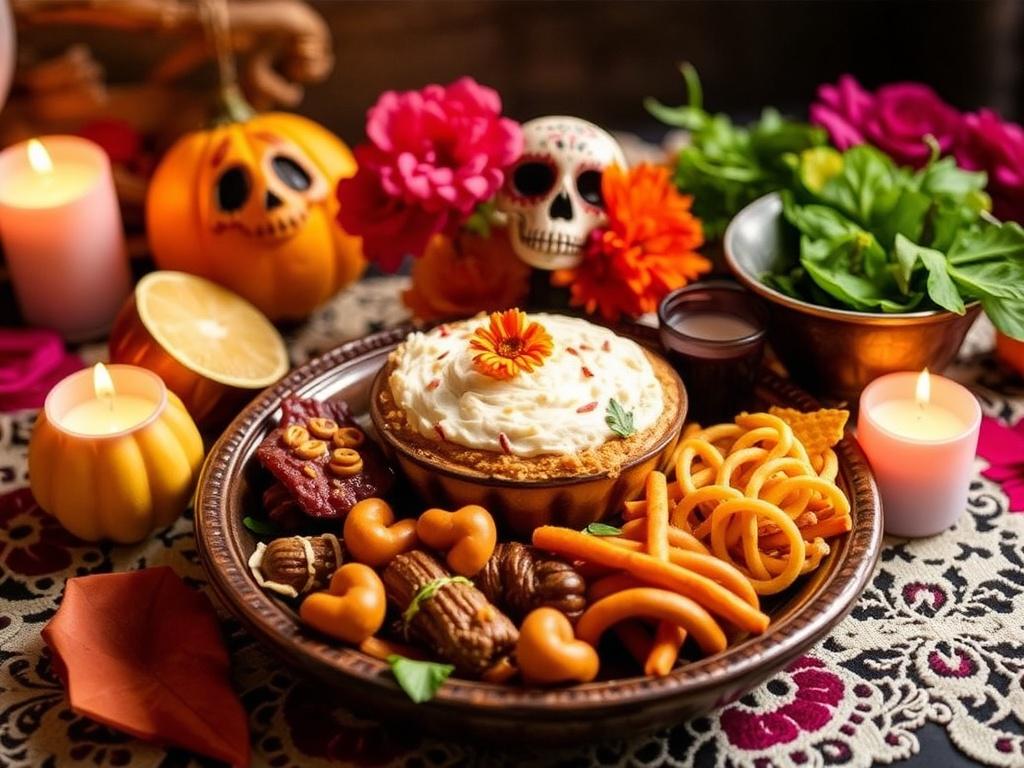
Food is central to Day of the Dead because it’s through shared meals that memory is kept alive. Families prepare special dishes their loved ones enjoyed, and often set an extra place at the table for the returning spirit. These meals range from everyday favorites to richly spiced regional specialties. Below are some of the most iconic foods connected to the festival.
Pan de Muerto (Bread of the Dead)
This slightly sweet, round bread is often decorated with dough shaped like bones and dusted with sugar. Recipes vary by region — some include orange blossom water, anise seed, or sesame seeds. It’s both an offering and a treat eaten with hot chocolate or coffee. Baking pan de muerto is a family activity in many homes, with recipes passed down through generations.
Sugar Skulls (Calaveras de Azúcar)
Handmade or mass-produced, sugar skulls are molded from compacted sugar, decorated with colorful icing, and sometimes labeled with a name. They can be humorous, sweet, or ornate; the point is not morbidity but playful acknowledgement. Children often enjoy painting them, and adults sometimes keep them as mementos.
Regional Dishes
Across Mexico, families serve an astounding variety of regional specialties during Day of the Dead: mole poblano in Puebla, tamales in many regions, mixiotes (meat steamed in maguey leaves), pozole (hominy stew), and seafood dishes in coastal areas. Each region brings its own culinary identity to the celebration, so trying local foods is a great way to understand cultural variety.
La Catrina and the Art of Satire
No discussion of Day of the Dead is complete without mentioning La Catrina. She is a skull-woman dressed in an elegant hat and finery — a satirical figure originally drawn by Mexican illustrator José Guadalupe Posada in the early 20th century and later popularized by artist Diego Rivera. Posada used La Catrina to mock Mexican elites who aped European fashions despite their Indigenous roots.
Over time, La Catrina has become an emblem of Day of the Dead. She embodies social commentary, artistic expression, and a reminder that death is democratic. In modern parades and costume parties, people dress as Catrinas and Catrines, painting their faces in elaborate designs and wearing classic Mexican-style clothing. The image is playful but also layered with critique and cultural pride.
Cemeteries: Sacred Public Spaces
During Day of the Dead, cemeteries transform from quiet resting places into vibrant communal spaces. Families clean gravesites, decorate them with altars and flowers, and often spend the night in the cemetery, singing, talking, and sharing food. Keeping vigil is a way to commune with the dead — and to reaffirm familial bonds among the living.
If you visit a cemetery during the festival, you’ll find a mix of solemnity and festivity. In some places, cemeteries glow with candlelight and echo with prayer; in others, there’s music and laughter as people celebrate the lives of those who have passed. The atmosphere is unique: death is honored, not feared.
Regional Variations and Local Customs
Mexico’s geography and cultural diversity mean Day of the Dead looks different from state to state, town to town. In Oaxaca, elaborate sand tapestries and comparative pageantry mark the holiday; in Michoacán — where the celebration is particularly strong — families travel to islands and lakes to decorate graves and observe rituals unique to the Purepecha people. In Mexico City, large public parades and contemporary art installations now accompany traditional practices.
In some regions, celebrations incorporate pre-Hispanic ceremonies that last several days, while other towns emphasize Catholic Masses and processions. Rural communities may maintain older customs that are less visible in urban tourist sites. This variety makes it important for visitors to be curious and respectful, and to recognize that Day of the Dead isn’t a monolith but a living, local tradition.
Comparisons: Day of the Dead vs. Halloween
Many travelers conflate Day of the Dead with Halloween because both occur around the same time and both involve imagery of the dead. But fundamentally, they spring from different cultural logics. Halloween has roots in Celtic festivals (like Samhain) that involved warding off spirits or dressing up to confuse them. It evolved into a spooky, playful holiday associated with costumes, candy, and tricks.
Day of the Dead, by contrast, is primarily about remembrance and reunion. While it can include playful elements (sugar skulls, parades, face paint), those expressions are deeply tied to honoring specific people. If Halloween is about making space for play at the border of the uncanny, Day of the Dead is about bringing loved ones into the communal circle of memory. When traveling, avoiding conflation helps you appreciate the distinct cultural meaning of each.
How to Participate Respectfully
If you’re a visitor, the best approach is curiosity combined with humility. Show interest, ask permission before taking photos, and follow local customs. Here are some practical tips to keep in mind:
- Ask before photographing altars or graves. Some families might welcome pictures; others may not.
- Dress modestly in cemeteries and religious spaces, especially during Mass or prayer.
- Offer to help: helping clean a grave or bring flowers is often appreciated and shows respect.
- Learn a few Spanish phrases (for example, “¿Puedo tomar una foto?” — “May I take a photo?”).
- Support local artisans by buying genuine papel picado, hand-painted skulls, or pan de muerto from bakeries.
- Be mindful of noise; grief and celebration coexist and both deserve space.
Public Celebrations and Contemporary Expressions
In recent decades, Day of the Dead has entered global popular culture. Large parades (like the one in Mexico City) attract thousands, with floats, dancers, and vast displays of La Catrina motifs. Artists and filmmakers have borrowed imagery and themes — sometimes respectfully, sometimes problematically. While global attention has helped preserve some traditions and generated economic benefits for artisans and performers, it also introduces commercialization and cultural dilution.
Many communities respond by emphasizing education: public workshops, school programs, and community projects teach the history and proper meaning of the rituals. This helps younger generations keep the tradition alive in ways that respect its roots while allowing for creative expression. Contemporary artists use traditional symbols to comment on modern issues, from migration to social justice, showing that Day of the Dead remains flexible and resonant.
Children and Family: Teaching Through Ritual
For many Mexican families, Day of the Dead is how children learn about loss, memory, and continuity. The rituals are accessible and concrete: you bake a bread, you light a candle, you tell a story about a grandparent. This practical engagement helps demystify death and makes mourning a shared, teachable moment.
Activities for kids include decorating sugar skulls, making papel picado, building miniature altars in school, and listening to family stories. These hands-on practices pass down both cultural skills and emotional literacy. Rather than shielding children from grief, the festival integrates them into the communal work of remembering.
Healing, Memory, and Identity
At its core, Day of the Dead serves psychological and social functions: it creates a ritual framework for remembering lost loved ones, provides comfort to the bereaved, and reinforces family and community ties. In societies where migration has separated families across regions and borders, the ritual can be especially poignant — offering a way to re-knit a sense of belonging across distance and time.
The festival is also a repository of national identity. In Mexico, Day of the Dead embodies a worldview that balances the sacred and the everyday, the Indigenous and the colonial, grief and joy. For people of Mexican heritage around the world, it’s also a touchstone of cultural continuity, a practice that keeps language, food, and family stories alive across generations.
Practical Guide: Building a Simple Ofrenda at Home
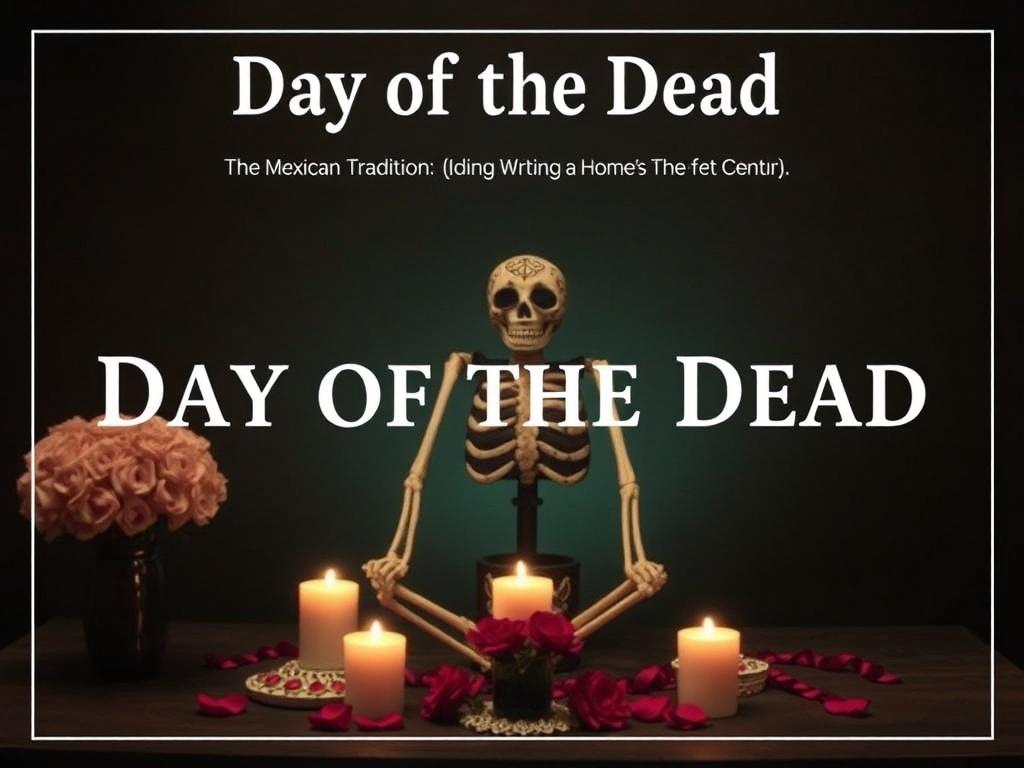
If you want to create a respectful ofrenda where you live, here’s a simple step-by-step guide. This is meant for people who want to honor their own loved ones or learn by doing in a respectful manner — not to appropriate or commercialize. Make it personal, and remember the intention matters most.
- Choose a dedicated space: a small table or shelf works well. Clean it before you begin.
- Decide on levels: even one or two levels can symbolize the spiritual and earthly planes.
- Place a photograph of the person you wish to honor. If you don’t have a photo, a written name or a personal item will do.
- Light a candle and place it near the photograph. The flame symbolizes guidance for the spirit.
- Arrange marigolds or bright flowers; if real ones aren’t available, use orange or yellow blossoms.
- Add food and drink the person liked; leave a glass of water and some salt.
- Place a small personal item (glasses, hats, tools, or a favorite book) on the altar.
- Include a sugar skull or a small pan de muerto if you can find them.
- Play music the person loved, sing, or tell stories to keep memory active.
- When the time comes to close the ofrenda, thank the spirits and gently blow out the candles.
Common Misunderstandings and Cultural Sensitivity
Mistakes can happen, especially when a cultural practice becomes visible and popular worldwide. Some common misunderstandings include reducing the festival to costume parties, using sacred symbols as casual Halloween décor, or overlooking the solemn, deeply personal aspects of the ritual. To avoid harm, remember that Day of the Dead is a living practice tied to grief and remembrance — it’s not merely a spectacle.
If you’re a journalist, artist, or traveler, prioritize listening to local voices and crediting communities when you share images or stories. Respect personal altars and graves. If you’re participating in public events, consider supporting local initiatives that preserve the cultural heritage behind the festival.
Day of the Dead Around the World
While its roots are Mexican, the spirit of Day of the Dead has traveled globally. Mexican diaspora communities in the United States, Europe, and beyond continue to observe the festival, often adapting it to new contexts. Cities with large Mexican populations host parades, altar exhibitions, and school programs. International museums and cultural centers sometimes showcase Day of the Dead art and history, helping educate broader audiences.
Every adaptation brings both opportunities and challenges. On the positive side, global visibility can create markets for Mexican artisans and encourage cross-cultural understanding. On the other hand, commercialization and superficial appropriation risk eroding the depth of the tradition. The healthiest adaptations are those rooted in education, respect, and collaboration with Mexican communities.
UNESCO and Cultural Recognition
In 2008, Mexico’s Day of the Dead was inscribed on UNESCO’s Representative List of the Intangible Cultural Heritage of Humanity. This recognition highlights the ritual’s cultural significance and its ongoing role in family and community life. It also encourages measures to safeguard the tradition against loss or commodification, supporting educational efforts and local knowledge transmission.
Day of the Dead in Art, Film, and Literature
Artists have long been inspired by Day of the Dead. From folk art to contemporary installations, the festival’s imagery provides a rich visual and thematic palette. Films such as the animated feature inspired by the tradition use its motifs to craft stories that resonate with global audiences while emphasizing cultural specificity. Writers and poets likewise draw from the festival to explore memory, identity, and mortality.
These cultural works often spark interest in Day of the Dead abroad, prompting deeper engagement with the tradition. When creators approach the subject with respect and research, they can broaden understanding without reducing the ritual to cliché.
Resources and Further Reading
If you want to dive deeper, look for books on Mexican popular religion, biographies of key cultural figures like José Guadalupe Posada, and ethnographies of specific regions (for example, studies on Michoacán or Oaxaca). Visiting museums with Mexican folk art collections, participating in local workshops about papel picado or sugar skull making, and attending university lectures on Indigenous Mexican cosmologies are excellent ways to learn in depth.
Online, seek out articles and websites maintained by cultural institutions in Mexico, or by Mexican-run cultural centers in your city. These sources are more likely to present nuanced, well-researched perspectives than generic travel sites.
Preparing for a Visit: Practical Tips
If you plan to experience Day of the Dead in Mexico, preparation makes the experience richer. Learn a few basic Spanish phrases, read about local customs of the town you’ll visit, and check event listings for parades or community vigils. Respect local schedules; many events happen at night and in cemeteries, so plan accordingly. Bring comfortable shoes, a respectful attitude, and an open heart.
Consider timing: smaller towns often have the most vivid, personal rituals, whereas cities offer large-scale parades and installations. Both have value — the former for intimacy, the latter for spectacle and communal engagement.
Stories from the Heart: What People Say
Visitors and locals alike often describe Day of the Dead in emotional terms — a kind of bittersweet joy. A mother might tell you how she places a favorite scarf on an altar and talks to her deceased child as if the child can still hear. A young artist might explain how drawing La Catrina connects them to social critique and family history. A baker will describe the pride of seeing their pan de muerto on numerous altars across town. These personal testimonies remind us that cultural rituals are lived and felt, not just studied.
Final Thoughts: Why It Still Matters
In an era when many traditions face erosion from globalization, Day of the Dead persists because it meets deep human needs. It answers the universal questions of memory, mourning, and belonging with rituals that are tactile, communal, and adaptive. The festival allows people to hold contradictory emotions — sorrow and joy, mourning and celebration — in a single shared space. That balance, expressed through color, food, music, and ritual, ensures the tradition remains meaningful for new generations.
Conclusion
Day of the Dead is more than a spectacle; it is a living, layered tradition that honors memory, nurtures community, and offers a unique perspective on mortality. Whether through the flicker of a candle on an ofrenda, the scent of marigolds leading a path, or the playful grin of a sugar skull, the festival teaches a human lesson: to remember is to keep the dead alive in the stories we tell and the meals we share. If you approach the celebration with curiosity, respect, and a willingness to listen, you’ll find it not just culturally rich but profoundly human.